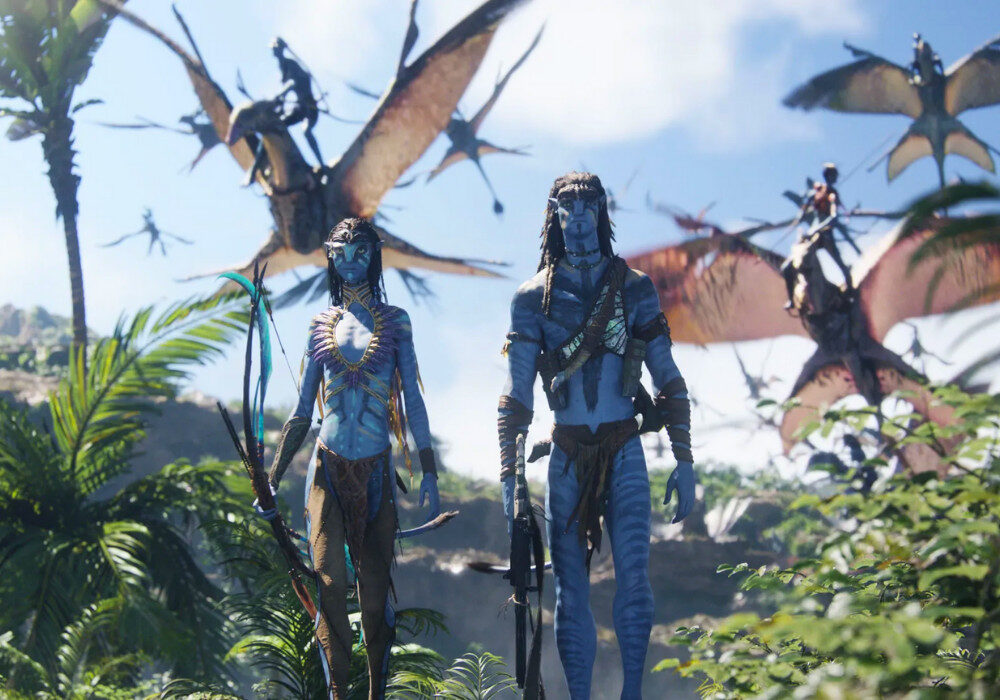

Spoiler Warning: This piece discusses major plot points from ‘Avatar: Fire and Ash’
I went into ‘Avatar: Fire and Ash’ with a guarded optimism – the kind you reserve for franchises that have already asked a lot from you, both emotionally and in terms of sheer hours.
I liked ‘Avatar’ more than I had expected to. I enjoyed ‘The Way of Water’ in the way you enjoy being dropped into a world built with obsessive care – even if the dialogue occasionally sounds like it was written by someone who has never overheard a human conversation. But after the long wait between the first two films, having a third arrive just a few years later – and picking up only weeks after the events of the second – lands differently. Less a rare occasion, more of the sense that you’re already mentally checking the runtime while still letting yourself be pulled back into Pandora.
Read More: ‘Wicked: For Good’ Review – When Friendship Is The Strongest Spell

When Excess Begins To Resemble Déjà Vu
The problem with ‘Fire and Ash’ isn’t that it’s not well-versed in the language of ‘Avatar.’ It’s that it’s almost too fluent in it – to the point where the series starts to echo itself, scaled up and dialled in, with the assurance of a franchise that knows it already has you. It’s three hours of colossal spectacle, pristine technical craft, and near-constant action, carried by a cast who disappear almost entirely into motion-capture. The battles are staged with such forceful precision, reminding you why James Cameron is still the gold standard for large-format, glued-to-your-seat cinema. When he’s in pure set-piece mode – aerial pursuits, reef-side mayhem, the camera gliding through space with uncanny instinct – the film becomes a full-body experience.
But the film also carries the weary cadence of a story trying to win through sheer accumulation: extra lore, heavier terminology, new creatures, expanded mythology, bigger clashes. Eventually, the excess starts to blur – and what’s added begins to resemble what you’ve already seen.
Pandora Expands – Again
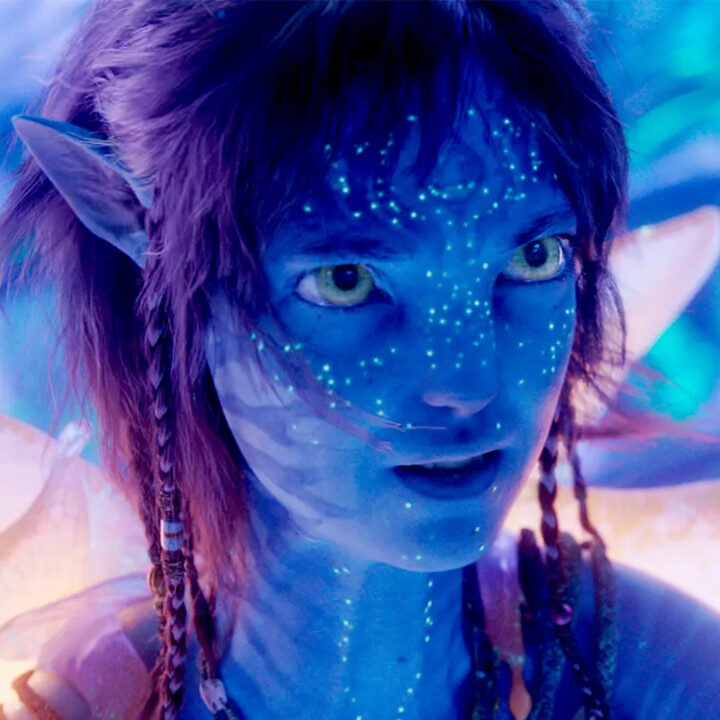
The film opens with the Sully family living among the Metkayina after fleeing their forest home, still carrying the fresh grief of Neteyam’s death. The emotional premise is strong: a family forced to survive not only external threats, but also the internal unraveling that follows loss – guilt, resentment, and the way grief rewrites what you think you’re allowed to feel. Jake, ever the ex-Marine in a Na’vi body, reaches for control. Neytiri reaches for faith, fury, and a hardness that feels more like self-protection than it does strength. Their son Lo’ak spirals under the weight of responsibility, while Kiri’s connection to Eywa deepens into something close to a direct line – an idea that could’ve been fascinating had the film not kept stopping to spell things out with the grave seriousness of a cutscene.
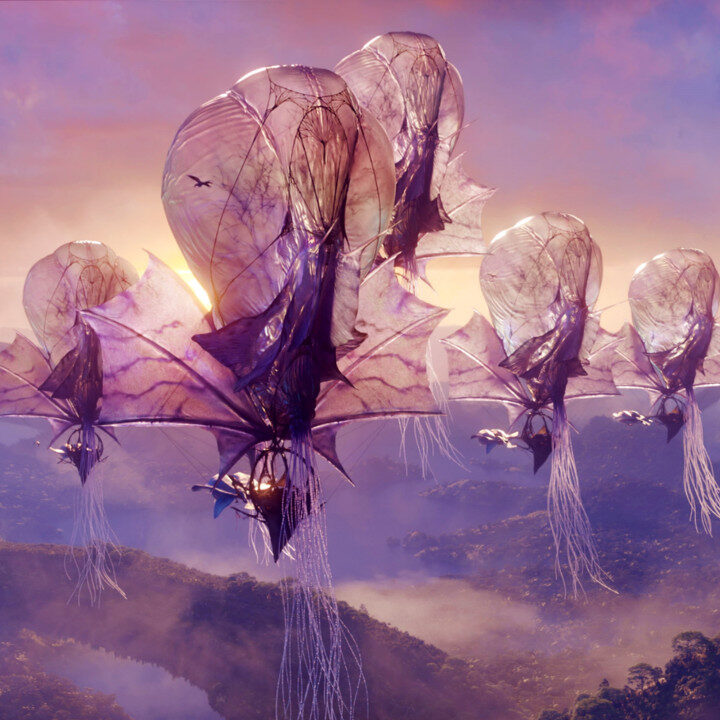
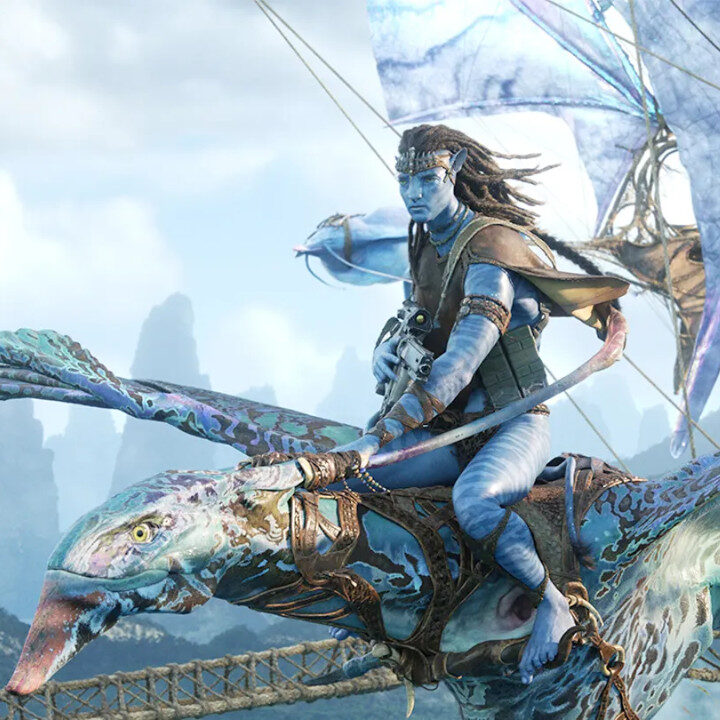
Then, the plot does what ‘Avatar’ plots do: it surges forward with urgent stakes, lands in another stunning environment, introduces another community, and sets up another collision between the sacred and the industrial. The Wind Traders appear – nomadic Na’vi moving through the sky on dreamy airships, a piece of invention that reminds you that Cameron’s imagination still has real elasticity. It’s the closest the film gets to recapturing that ‘you have to see this’ thrill of the first ‘Avatar’: the sensation of drifting through an ecosystem that feels whimsically engineered.
And then, as expected, paradise gets punctured.
A Villain Team-Up That Should Feel Fresh
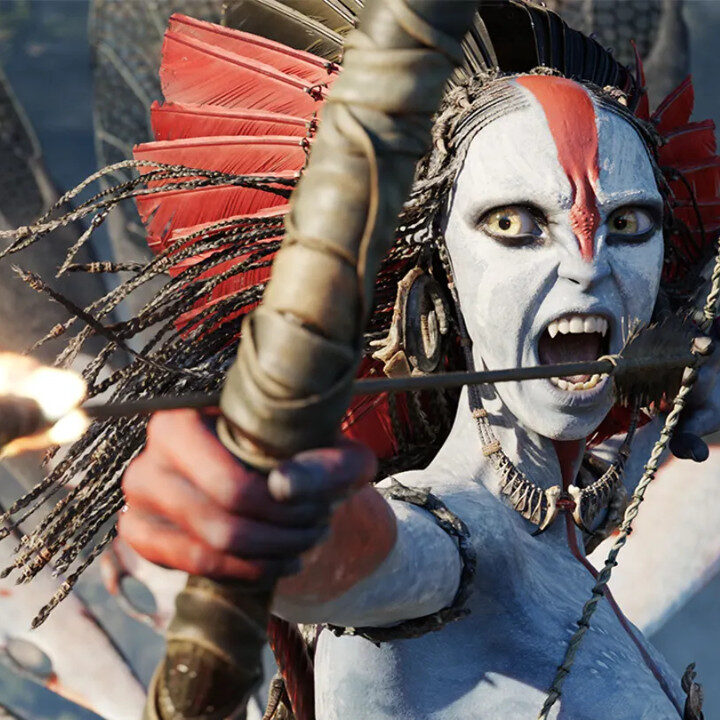
Enter Varang. Oona Chaplin’s new antagonist is easily the most compelling fresh element in the film – a warrior-leader of the Mangkwan Clan (the Ash People), who’ve turned on Eywa after their homeland has been reduced to volcanic ruin. She arrives with IMAX-ready force: a feathered black-and-red headdress, war paint, feral charisma, riding a Nightwraith with the ease of someone who knows exactly what she’s doing. In fact, she’s one of the few ‘Avatar’ characters who doesn’t get reduced to a walking message. Chaplin gives Varang real presence – in a performance that pushes through the motion-capture gloss and lands with genuine intensity.
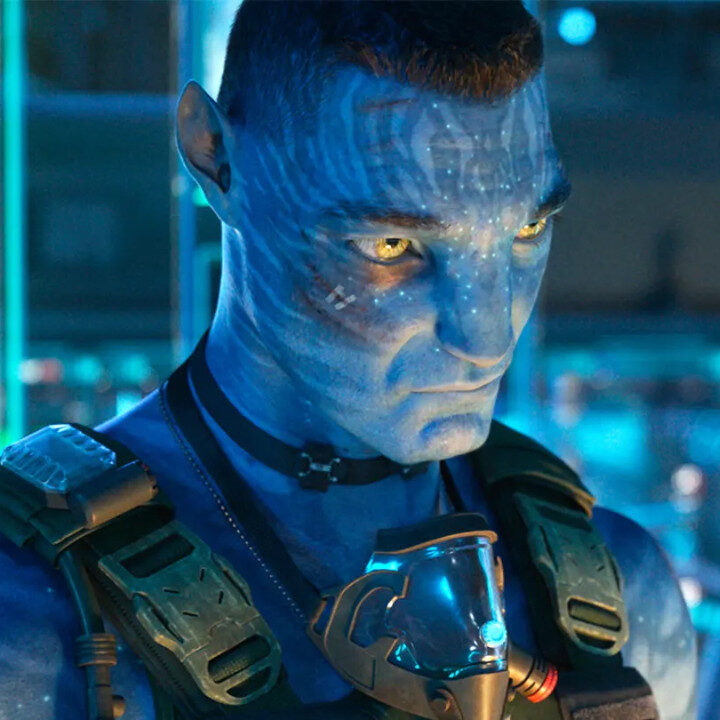
The issue however, is that the writing won’t let Varang become anything more than an idea. She’s rage, domination, and a thunder-summoning mantra, sliding the film back into familiar franchise logic: equip the Indigenous-coded faction with industrial firepower so the escalation can keep escalating. Her alliance with Quaritch is, on paper, a sharp move – a new force pairing with a known one: a novel way to avoid a pure rerun. In practice, it makes the film feel like it’s spinning two cycles at once. Quaritch returns as the series’ dependable heavy; Stephen Lang still clearly enjoying himself. While Spider’s conflicted tie to his father gives the film a ready-made emotional throughline, it’s also a tension that the last film already mapped – and here it widens rather than deepens.

When Wonder Can’t Cover The Dialogue
There’s a bigger structural problem at play too: ‘Fire and Ash’ claiming it’s racing against the clock while repeatedly making room for things that flatten its momentum. It’s not that the film has downtime – it needs downtime – it’s that it spends that time stacking exposition and lore until your attention starts to feel like labour. Keeping up becomes its own task: Na’vi terminology, creature names, spiritual rules, military language, and the ever-expanding mythos of Eywa’s plan – all while the film asks you to accept lines like ‘Bro, you good?’ with a straight face. There are only so many times you can watch a civilisation framed as biologically and spiritually advanced speak in skateboarder vernacular before your mind drifts to literally anything else.
Cameron has never been a dialogue guy, yet the earlier films largely got away with it because the wonder carried the weight. In ‘The Way of Water,’ the thirteen-year gap also helped: it felt like returning to a world that had grown more layered in its absence. Here, with the novelty worn thinner, the clunky lines sit front and centre, distracting in a way that’s impossible to ignore. At one point, a character urgently shouting about needing to pee lands not as comic relief but as accidental self-parody – a reminder that the film has little interest in the limits of audience stamina. Three hours and fifteen minutes is a long time to stay entranced, and an even longer time to sit with dialogue that feels borrowed from another film altogether.
The Craft Still Shows Up
And yet – it would be dishonest to pretend the film doesn’t deliver what it’s built to deliver. The action sequences are, again, astonishingly articulate. Cameron stages large-scale conflict with a crisp sense of geography that makes other blockbusters feel scattershot. The marine life remains gorgeous and faintly unnerving, upholding the sense of a living ecosystem rendered with near-audacious mastery. When the film locks into its grand sequences – battle as choreography, movement as emotion – it’s euphoric.
But visual power isn’t the same as forward drive, and by the time ‘Fire and Ash’ reaches its final stretches, the fights start to feel segmented rather than mounting – essentially moving you through a string of increasingly elaborate set-pieces. The environmental spirituality that once felt transporting can, at moments, start to sound rote – not because the message is wrong, but because it’s being reiterated with the polish of a tagline. While the first two films had sincerity and wonder, this one has been thinned out by repetition and sprawl.
The lingering sadness of ‘Fire and Ash’ is that the pieces for something more incisive are all right there: the family’s mourning, Neytiri’s fury, Lo’ak’s guilt, Spider’s impossible position, Varang’s potential as an antagonist forged by what’s been taken from her. The film brushes against these threads – even laying them out – before rushing toward the next battle, the next mythic reveal, the next technological flex.
Verdict
‘Avatar: Fire and Ash’ is still an astonishing technical achievement and a finely tuned piece of blockbuster craft. The sensory feast is a high watermark for spatially legible action, as well as proof that Cameron can still make cinema feel physical. However, it’s also the most repetitious entry so far: dense with lore, emotionally thin where it counts, and stretched to the point where the weak dialogue stops being a tolerable flaw and becomes the thing you hear in the gaps between explosions. There’s enough here to keep you in your seat – but not enough to explain why you’re still there three hours later, praying to the Great Mother for an intermission.

Catherine Pun
A Hong Kong native with Filipino-Chinese roots, Catherine infuses every part of her life with zest, whether she’s belting out karaoke tunes or exploring off-the-beaten-path destinations. Her downtime often includes unwinding with Netflix and indulging in a 10-step skincare routine. As the Editorial Director of Friday Club., Catherine brings her wealth of experience from major publishing houses, where she refined her craft and even authored a book. Her sharp editorial insight makes her a dynamic force, always on the lookout for the next compelling narrative.