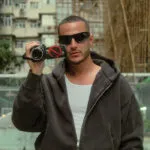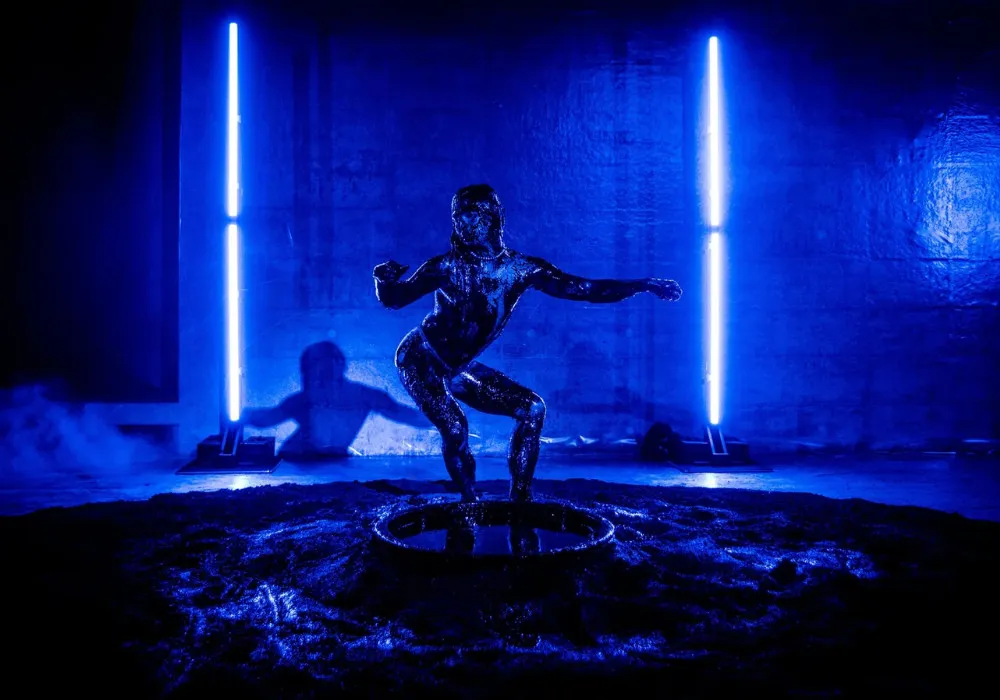
When Joshua Serafin stepped into the Tomorrow Maybe gallery at Eaton Hong Kong, the space had already been transformed. The white cube was gone – in its place, a black box: dark, immersive, and humming with the residue of performance – where objects seemed to hold movement, installations carried grief, and the room itself felt like a body mid-ritual.
Brussels-based and Bacolod-born, Serafin (they/them) is a performance artist, choreographer, and world-builder whose multidisciplinary practice spans dance, visual art, video, and myth-making – all in service of an ongoing inquiry: what does it mean to become the fullest version of yourself when that self has been interrupted by centuries of colonial power? Working across spirituality, ecology, queerness, and the postcolonial Filipino body, their work stages these questions unapologetically and in public.
We sat down with Serafin during their residency at Eaton Hong Kong – moving through grief, decolonisation, and the world they are building towards next.
Read More: Amazing Asian Artists To Have On Your Radar
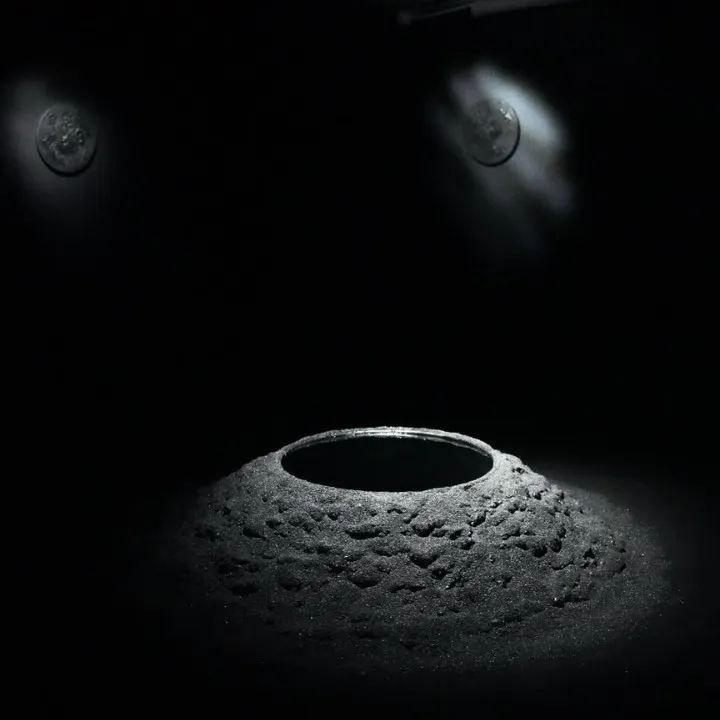
The exhibition is titled ‘Grieve the Departed Wound.’ Where does that title come from, and what does it mean to you?
It really began as a conversation with Joseph, Eaton’s Director of Culture. Many of these works came from major heartbreaks and very deep pain.
In 2021, during winter lockdown, I went through a crisis. Much of my twenties was spent making work about pain I had experienced in my life. Over time, these works became a material that healed – and that is why this exhibition is also about wounds. When you grieve, the deeper wound is like a cut that eventually becomes a scar.
For me, these artworks are scars from pain that I was able to heal from, and within that process, find happiness – through film, performance, video, photography, and sculpture. I also wanted the space to invite reflection. For people to come in and reflect in their own way.
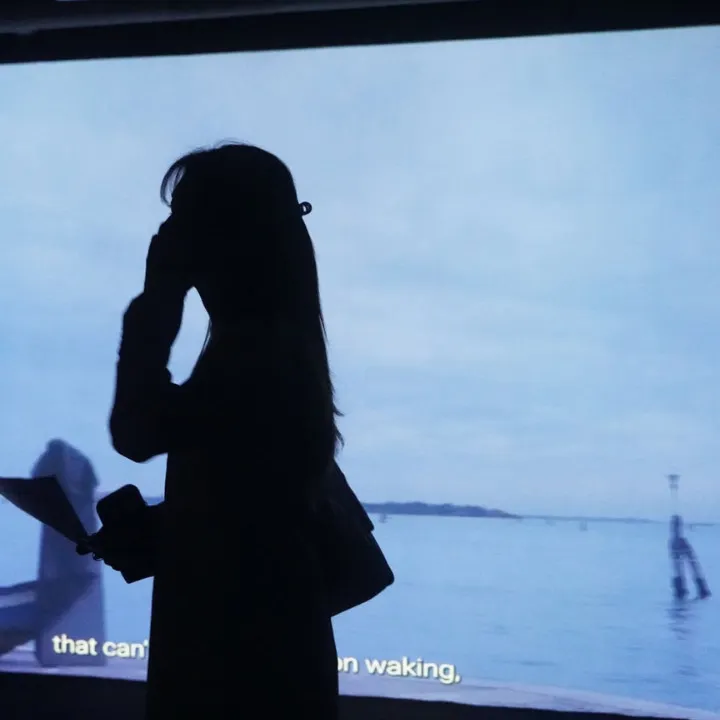
You’ve transformed the space at Tomorrow Maybe from a white cube into something far more immersive. What is it about the white cube that doesn’t work for you?
I’m never a fan of the white box situation. I’ve always been drawn to industrial spaces, abandoned parking lots – spaces with character. I really try to change the environment where the work exists, because the space itself carries a certain neutrality that speaks to the work.
White walls, for me, really become an institution – a reference to the market, to the different systems that drive certain works. And I’m not against that – I also dive into those worlds, and I have works that exist in the white cube.
But if I have the liberty to engulf people with an embrace of darkness, I really enjoy that.
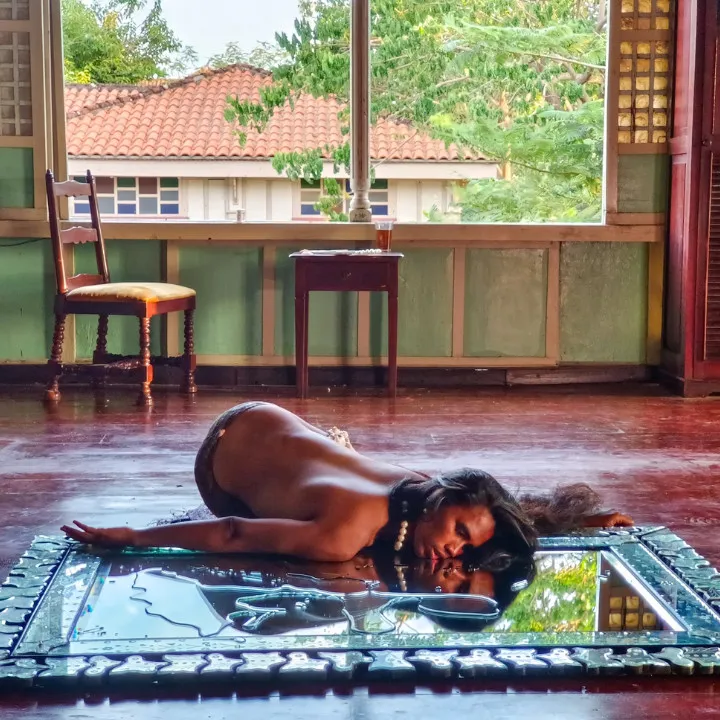
You’ve been living in Belgium for a long time now, yet your work is so deeply rooted in your Filipino identity. How do you carry that?
I’m from Bacolod, then I moved to Manila, then to Hong Kong where I lived for two years, and now Belgium for the past 10 years – which also feels like home. This process of migration has put my body in a constant state of flux, in a state of displacement. And when you are constantly displaced, there is a yearning for rootedness, a yearning for grounding. For me, that always leads back to the Philippines.
I always say that the Philippines is where I draw so much of my inspiration from. But I also need some distance from it in order to articulate what I have experienced and make something from it. These are narratives that have been suppressed for a very long time, and whatever cultural landscape I bring them into, they are something I carry with me.
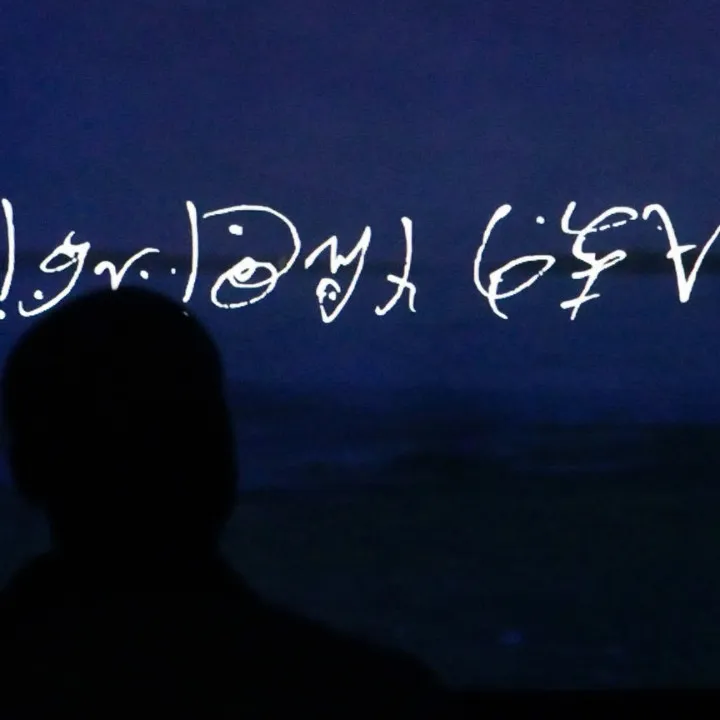
A recurring thread in your work is this idea of speculation – imagining a pre-colonial Philippines that was never disrupted. What does it mean to you to speculate a world that never was?
It comes from the desire to imagine the world we could have had – if the Philippines had not been colonised by Spain, America, or Japan. What if we had the luxury of time to develop our own culture, architecture, language, vocabulary, and gender identities? What if we had been able to construct our own lineage?
For me, that speculation is really about imagining what society could have become, what deities could have emerged, and what kinds of bodies might have existed and been celebrated. It is this desire to become the full version of ourselves – the version that was not disrupted by colonial and Western powers.
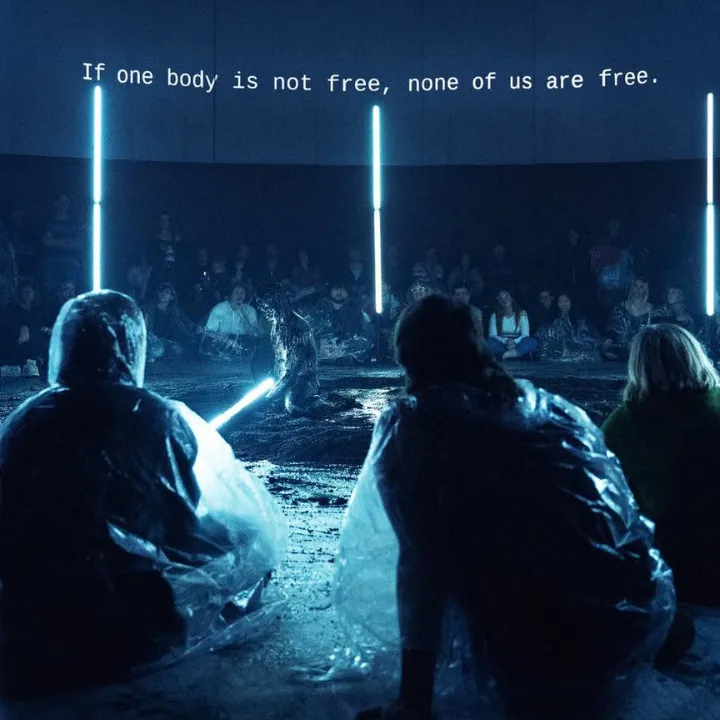
When you bring these narratives into spaces in Europe, places that are historically tied to those very power structures, is there friction in that?
I think that is the work. We are so conditioned to submit. What I do in performance is about imposing these bodies, and imposing this narrative – unapologetically.
We have always been very kind, but that kindness has also been conditioned into a certain way of behaving. I’m also not doing this for them. I’m doing it for the people I represent and the people I carry with me. I’m not here to educate people on what they should already be doing for themselves.
But in insisting on this, I hope to bring a certain visibility – to begin having these dialogues, to start articulating what we could have had, but did not, because our own evolution was disrupted.
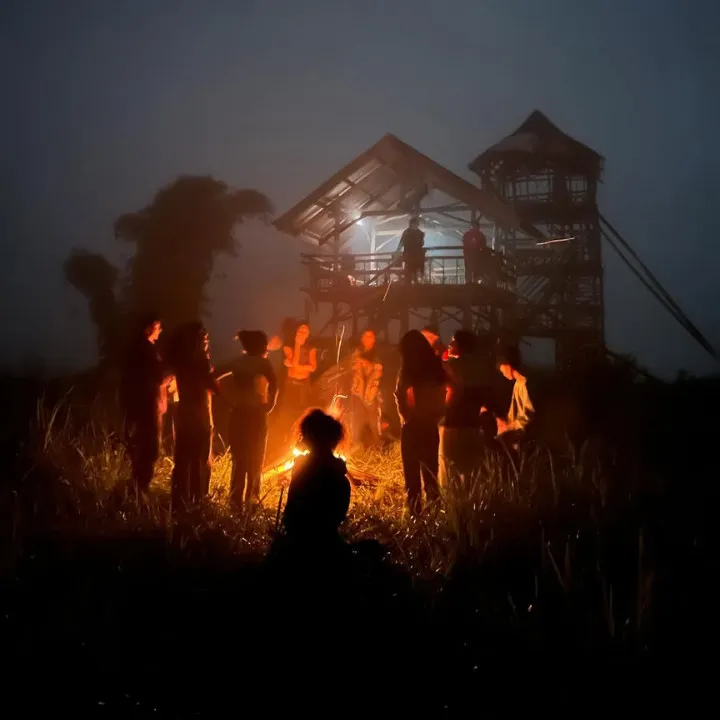
Your work is deeply rooted in indigenous traditions – how do you research that?
In recent years, I’ve been returning to the Philippines often – to understand where it is now, politically, geographically, and culturally. I’ve also been very fortunate to be welcomed into different communities, including the Talaandig in Bukidnon, through friends and fellow artists. Through those experiences, I’ve come to realise that many of the practices we assumed were lost were never actually lost. They are still there.
I think that shift in thinking is important for Filipinos – to understand that we did not lose everything pre-colonial, because these traditions still exist today. Sometimes the challenge is simply access.
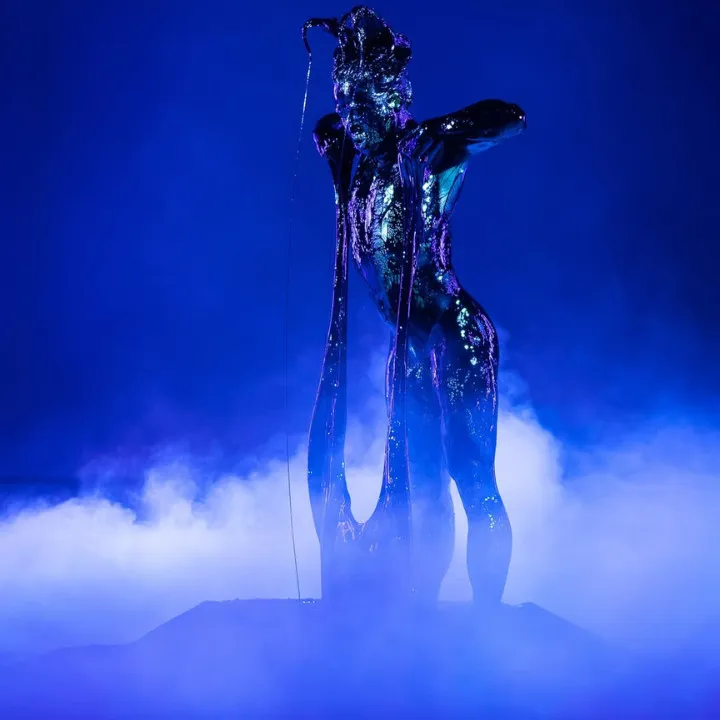
And across all of that travel, what commonalities have you found?
Shamanistic practices, rituals, and spirituality share so much. It is the same – it simply takes different forms, different songs, dances, materials, and iconography across different parts of the world. But the struggles are often the same too, especially when it comes to the imperial powers of the West.
I’ve been blessed to witness that broader global picture, and with that comes a responsibility. How can I honour these narratives? How can I transform them into work, performance, film, or writing, and use my platform to bring these stories to life? These stories are beyond me. I see myself only as a vessel – a storyteller for the stories that have been told to me.
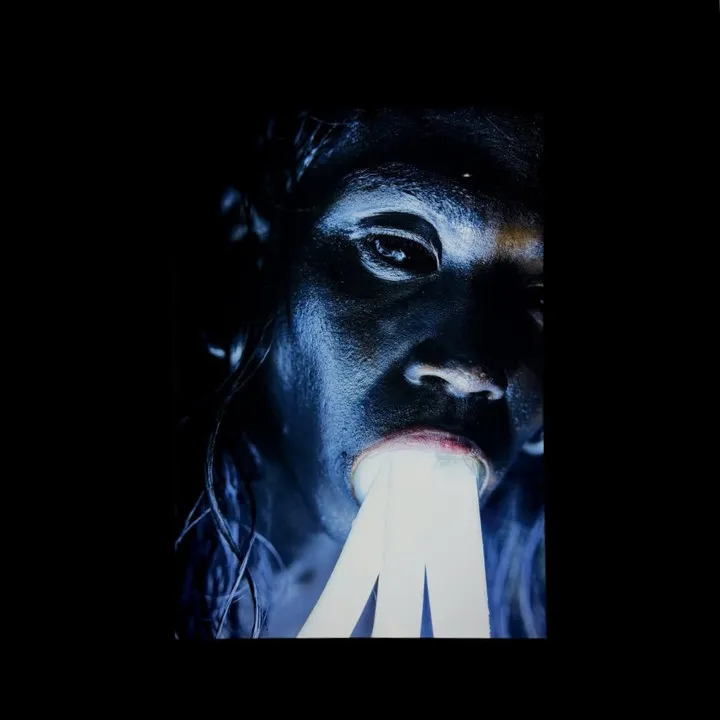
You mentioned spirituality as one of those common currents across cultures. What is your own relationship with it – how did you first find your way in?
I grew up in a very Christian household, though my parents were not especially religious. When I was young, I found a kind of sanctuary in the church.
Later, when I went to art school in Paris, I was introduced to many different deities and forms of spirituality – and that was when I became really interested in Buddhism, Pantheism, and different religions from around the world. When I was 18, I also went to China to study Buddhism, Qigong, and Tai Chi.
I think that was part of my way of decolonising my own spiritual practice, because Catholicism was imposed. Very early on, I knew it was not fully working for me – in the Philippine context, it felt like one ideology used to explain certain forms of power and to restrict certain bodies.
So I began searching for different forms of religion, different forms of God and deities. I came to understand that globally, many of them share the same objective: love, peace, and care. That was when I began shaping my own cosmologies. For me, there is one supreme, universal energy that moves across the world, and each culture has created its own image of that.
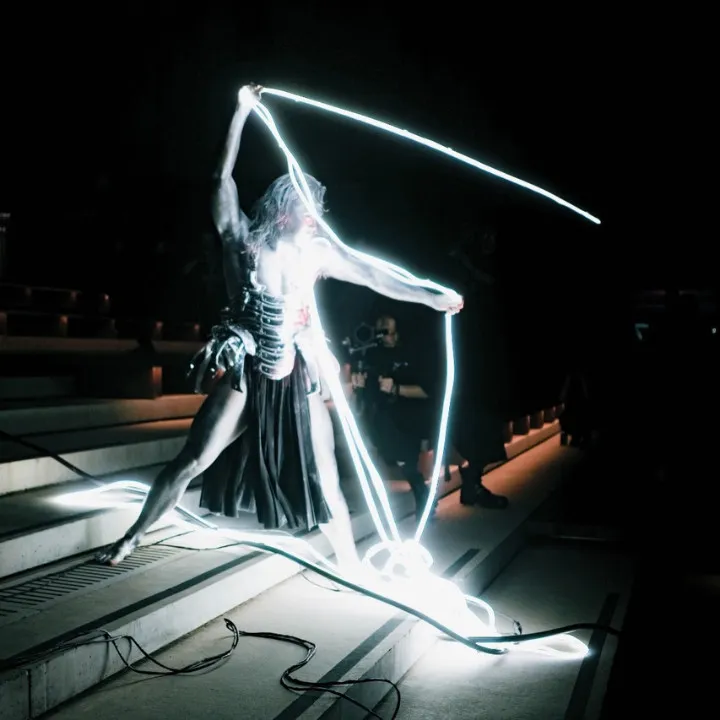
And how does that spiritual framework feed into the work itself?
For me, it is a very important source of creation. A lot of my work involves creating deities, world-building, and myths – whether around celestial beings, Power Rangers, Naruto, or video games. What fascinates me is that they all propose an alternate universe, away from the one we have created.
Making art, writing, creating – it is all a spiritual journey. It puts me in a place of facing emotional death, but also facing my own demons. And that is connected to what is happening globally. Within my own small world of creative process, I keep asking how I can respond to what is happening and propose a world that actually functions well for us as humans – not one rooted in destruction and extraction. I’ve committed my life to that.
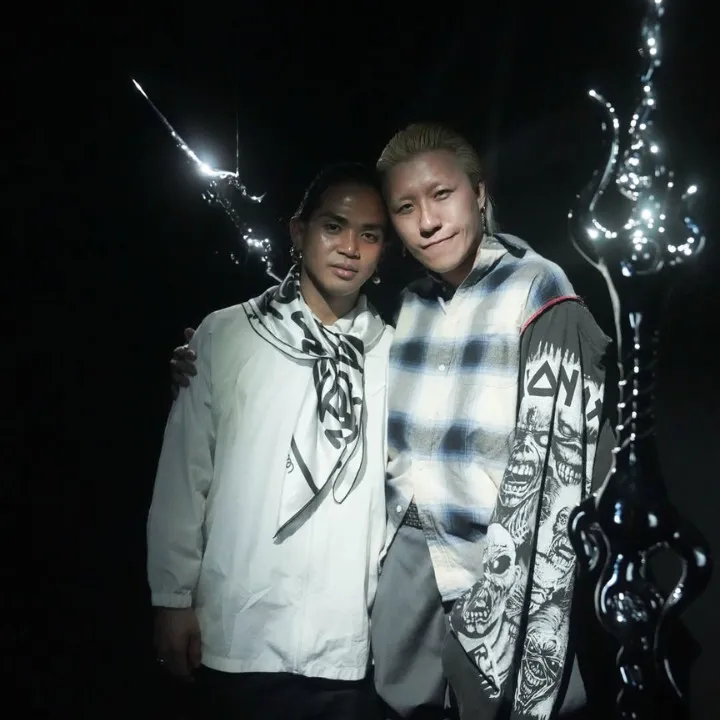
You’ve gone viral, your work is reaching global audiences – what’s the bigger vision from here?
The universe has given me a platform, and I think now I’m more concerned with how that platform can be shared. I’m creating a work a few years from now – I can’t say too much yet – but the goal is to bring different communities, artists, musicians, and designers together to create something collectively and collaboratively.
The question I keep asking myself is: how can I create a space where all of these people come together to imagine a universe – a world where our bodies are liberated to create, to be, and to excel?
It’s a big journey. But I’m happy to take it on.
Follow Joshua Serafin on Instagram to stay updated on their latest work.
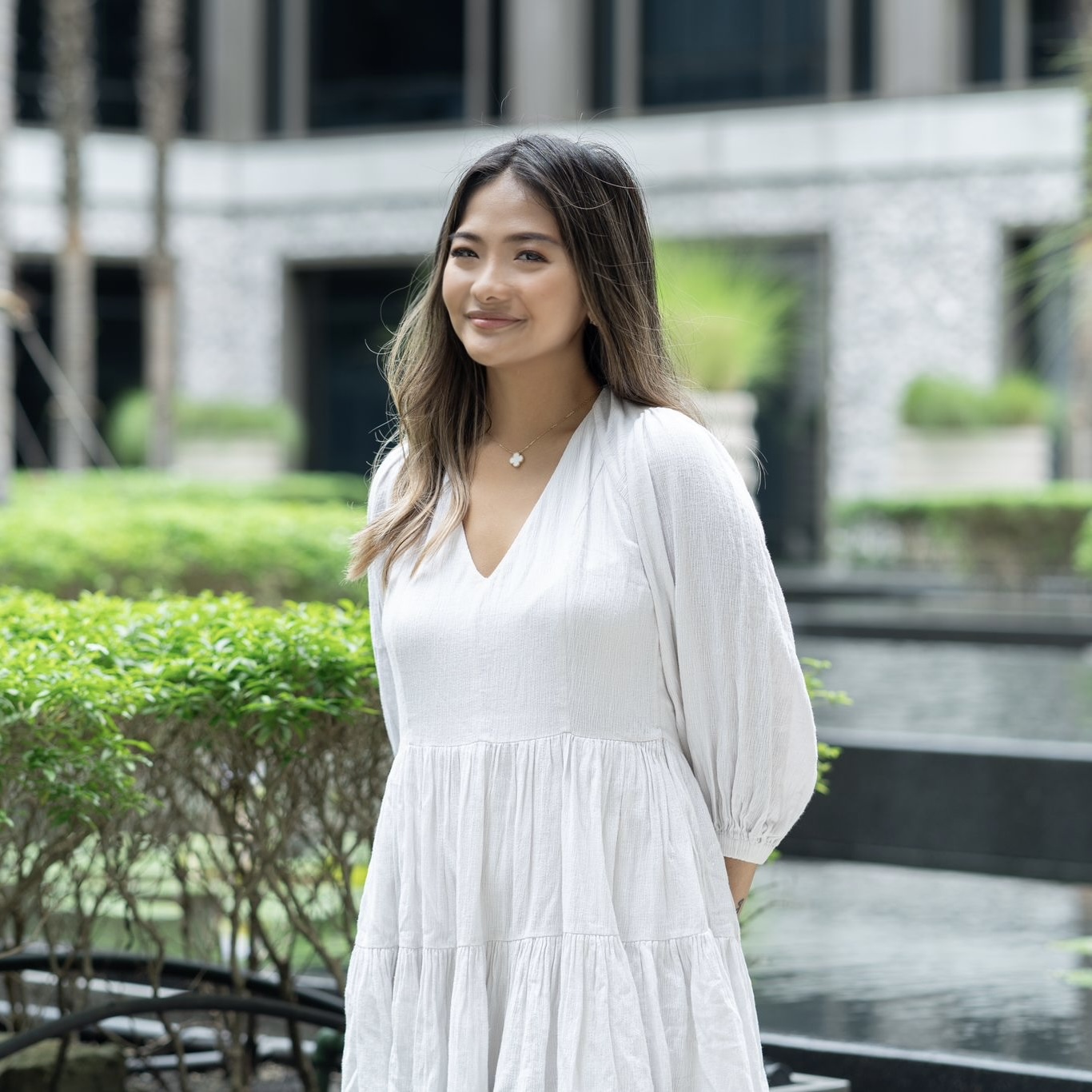
Catherine Pun
A Hong Kong native with Filipino-Chinese roots, Catherine infuses every part of her life with zest, whether she’s belting out karaoke tunes or exploring off-the-beaten-path destinations. Her downtime often includes unwinding with Netflix and indulging in a 10-step skincare routine. As the Editorial Director of Friday Club., Catherine brings her wealth of experience from major publishing houses, where she refined her craft and even authored a book. Her sharp editorial insight makes her a dynamic force, always on the lookout for the next compelling narrative.