
Spoiler Warning: This piece discusses major plot points from ‘Crime 101’
What makes ‘Crime 101’ stand out is how refreshingly human-sized it feels. Stepping out from under the imposing shadow of Michael Mann’s ‘Heat’ was never going to be easy, and ‘Crime 101’ seems fully aware of that. Don’t be fooled by the title: Bart Layton’s crime thriller is less fascinated by the engineering of crime than by the people caught inside it – and in that shift, it becomes more compelling than a glossy, star-led heist movie ever promised to be. Layton’s attention isn’t on how clever the job is, but on what the chase reveals: the pressures of the city around them, the institutions closing in, and the personal collisions that follow.
The film’s biggest hurdle is the inevitable comparison to Mann’s 1995 touchstone, which may tempt some viewers to measure it by what it isn’t. In more than a few ways, it carries the texture of mid-2000s adult thrillers – character-first and willing to linger on simmering tension and moral compromise instead of chasing constant twists and one-liners. You can still see Mann’s influence in the cops-and-robbers chess match and sun-baked LA sprawl, but ‘Crime 101’ holds its ground: engaging and satisfying on its own terms – whether you know Mann’s film by heart or you’re walking in cold.
Read More: Wuthering Heights (2026) – Our Editors’ Two Takes On A Divisive Adaptation
A Straightforward Thriller Elevated By Performances
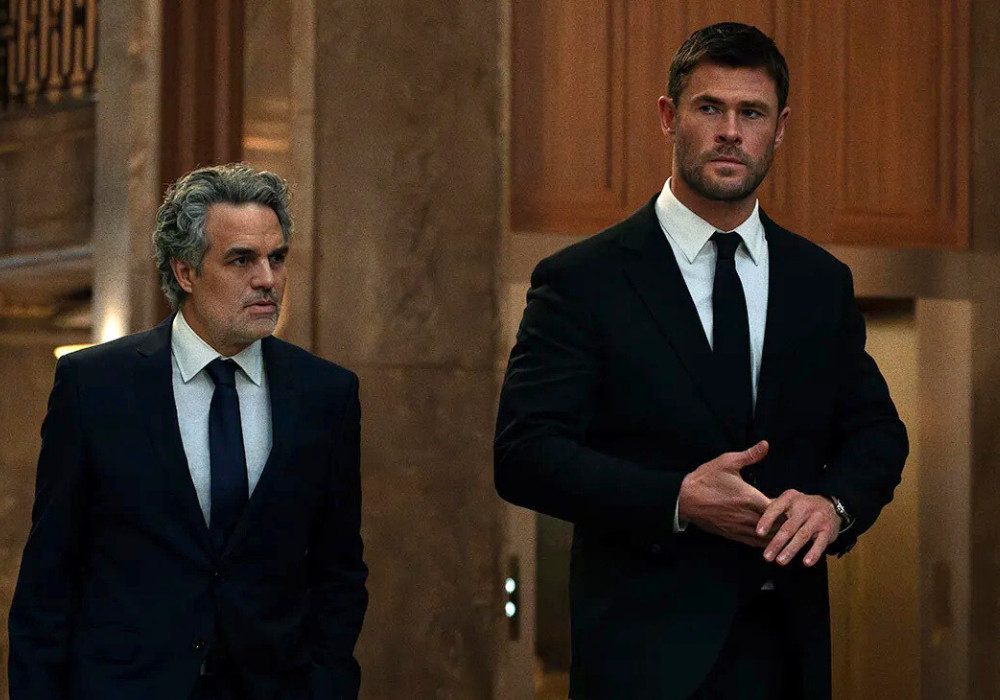
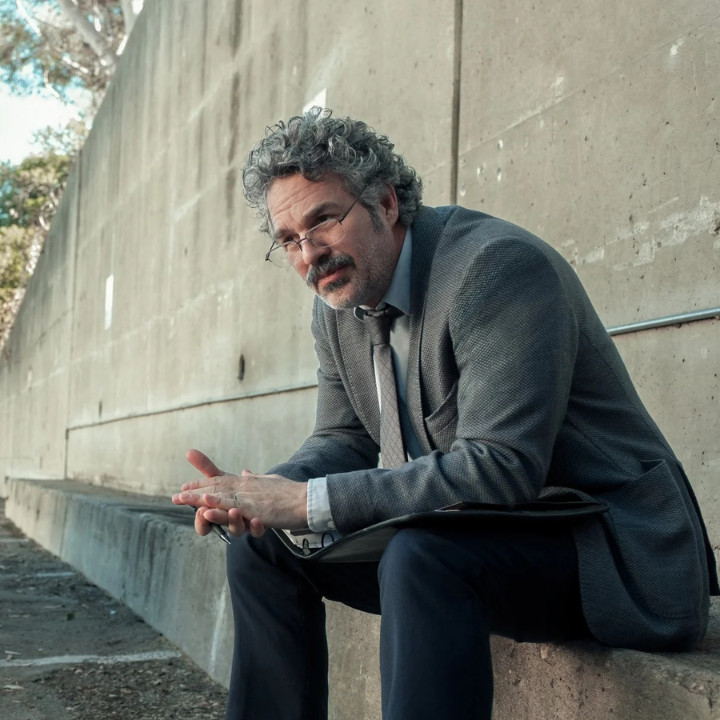
Set across Los Angeles County, ‘Crime 101’ follows a series of flawlessly orchestrated jewellery thefts that LAPD detective Lou (Mark Ruffalo) believes are the work of a single disciplined operator – the elusive Davis (Chris Hemsworth). As Lou inches closer to his suspect, Davis plans ‘one last job’ that will either secure his future or bury him for good. Along the way, we meet Sharon (Halle Berry), an undervalued insurance broker whose forensic reading of people pulls her into the orbit of both men, and Orman (Barry Keoghan), a platinum-blonde loose cannon whose volatile energy threatens to blow apart everyone’s carefully constructed plans.
Lou may be another entry in Ruffalo’s growing catalogue of scruffy, weary but fundamentally decent cops, yet he still gives the role its own shape – leaning into Lou’s stubborn persistence and his nagging awareness of the LAPD’s systemic rot. Hemsworth’s Davis, by contrast, keeps everything tightly held as a stoic, secretive professional thief. It’s one of Hemsworth’s most compelling turns since ‘Bad Times at the El Royale’ – a performance that hints at depth without ever reaching for the spotlight. Halle Berry’s Sharon is one of the film’s understated strengths: a woman paid to measure risk for everyone else, slowly realising how little anyone has ever valued her own. Berry plays her with pressure building beneath a carefully controlled surface, so when she finally erupts near the film’s climax, it lands as both release and long-overdue self-respect.
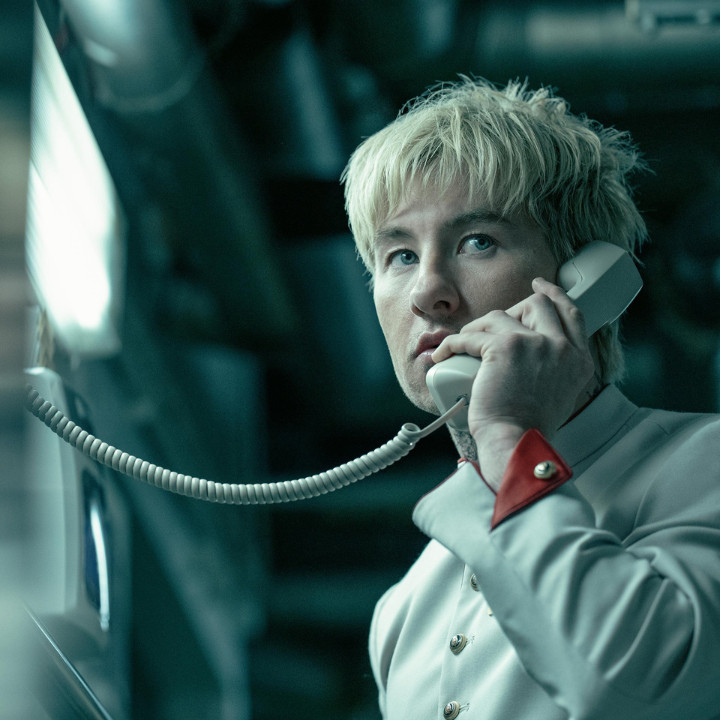
And then there’s Keoghan’s Orman, the movie’s live wire. Even when he spends half his screentime behind a motorcycle helmet, he gives off an ‘agent of chaos’ energy that makes you hold your breath in key scenes, just waiting for him to barrel into frame and knock everything sideways. Setting one of his earlier robberies – vicious, messy – against Davis’ tightly choreographed opening heist is a smart move, leaving the audience keenly aware that another, worse rupture is always coming; we’re simply waiting for the other shoe to drop. Crucially, Keoghan doesn’t become another Joker-fied wild card parachuted in to jolt the plot. ‘Crime 101’ gives Orman just enough humanity, especially when his bravado collapses into panicked, desperate violence.
Los Angeles Is A Character, Not Just A Backdrop
Another reason ‘Crime 101’ feels so engaging is how firmly it’s anchored in a real sense of place. This isn’t a generic ‘crime city’ stitched together on a backlot or buried under layers of virtual sheen: it’s an LA County you can trace, from highways and billboards to landmarks and anonymous parking lots. And the film’s geography isn’t only built from concrete – it’s built on cars, too. They aren’t just a way of getting from one scene to the next; they become private rooms on wheels, spaces where tension tightens, truths slip out, and exits are always being plotted – with the 101 highway serving as the story’s literal spine.
The extended stretch with Lou and Davis alone in a car – drifting through LA, swapping stories, sizing each other up – plays like a masterclass in contained tension. But the film’s real fireworks come in the chases: muscular pursuits that turn backstreets, underpasses, and traffic snarls into weapons. They’re not glossy, abstract bursts of speed; they’re close-quarters games of decision-making, where every lane change and every red light carries consequence. You can feel a faint lineage to Mann’s ‘Heat’ in the way the action treats the city like a board to be played, but it’s scaled to Layton’s more pared-back register. Orman’s helmeted rampages, especially, make his motorbike feel like an extension of a mind coming apart, tearing through frames – and lives – with barely-contained velocity.
With Hemsworth and Ruffalo both so closely tied to the green-screen Marvel machine, there’s a particular pleasure in watching them work in a film that feels tactile and street-level. Erik Wilson’s cinematography commits to that specificity: even the familiar drone shots of LA at night feel distinctly observed, traced in moody car lights and pockets of darkness instead of the usual polished lustre. The camera rarely settles for the easy wide, static ‘coverage’ that flattens so many mid-budget thrillers. Instead, it presses in, travels with the characters (and their rides), flips LA on its head, snaps shut with car doors, and shudders through intersections, giving even the in-between moments a faint, off-kilter charge.
That distinct visual language turns what could have been a merely competent heist flick into something more dynamic, and becomes one of the film’s most surprising bright spots. Even if you find yourself less than enthralled by the script or plot mechanics at points, the way ‘Crime 101’ looks, moves, and drives is often enough to keep you hooked.

Where The Engine Starts To Idle
For all its strengths, ‘Crime 101’ isn’t immune to overextension. At just over two hours, there are stretches – particularly in the middle act – where you can feel the narrative stretching to accommodate its own subplots and set-ups. It never fully collapses into convolution, but it occasionally wobbles close enough that you start to notice the stitching rather than the drive.
What rescues it is the way ‘Crime 101’ finds its centre again as it heads into the climax. That extended sequence with Lou and Davis alone in a car lets the film tighten the screws – two men who aren’t quite who they claim to be, feeling for vulnerabilities, testing how much the other will give away. The dialogue does flirt with being a little too on-the-nose – especially when the conversation turns to Steve McQueen films – but it lands because, by then, we know these characters. We can feel the stakes humming beneath the surface, and what’s left unsaid carries more force than the script’s weaker lines.
By the time guns are drawn in the wedding suite at the Beverly Wilshire, the film has already laid out the rules of this particular standoff: who hesitates, who doesn’t, who can walk away, and who can’t. And still, it’s taut enough that you’re not entirely sure those rules will hold – or whether this is the moment someone finally breaks form. That friction between what we expect from these archetypes and the small, destabilising surprises the film allows them is where ‘Crime 101’ finds its identity: a familiar dish seasoned just differently enough to savour in its own right.

Born in Korea and raised in Hong Kong, Min Ji has combined her degree in anthropology and creative writing with her passion for going on unsolicited tangents as an editor at Friday Club. In between watching an endless amount of movies, she enjoys trying new cocktails and pastas while occasionally snapping a few pictures.