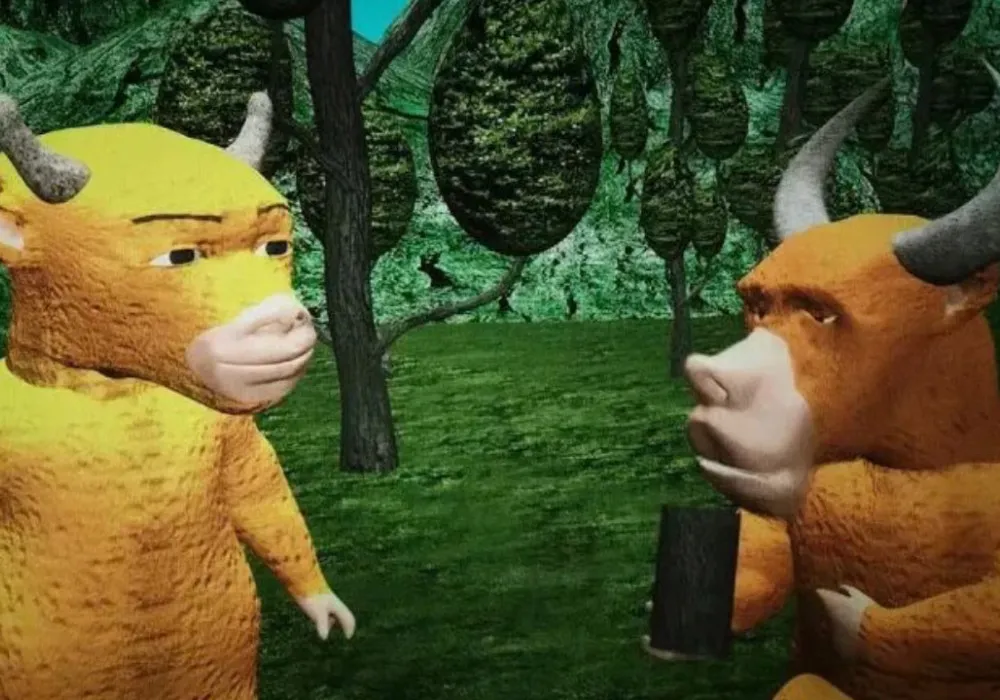

Chinese animated films have enjoyed a box-office boom in recent years, with ‘Ne Zha 2’ and ‘Nobody’ both breaking records in 2025. Yet the summer’s biggest surprise is ‘Niu Lai,’ a baffling animated feature unlike anything released in cinemas for decades.
Produced on a minuscule budget with rough animation, the 86-minute film was initially dismissed as a critical and commercial failure. Internet attention soon made it a must-see cinema event. ‘Niu Lai’ – translated as ‘The Bull Is Coming’ or ‘The Arrival of the Ox’ – has since become one of China’s most talked-about films of the year.
Read More: Italian Brain Rot – How Sneaker Sharks And Crocodile Bombers Took Over Your FYP
From Box Office Nobody To Viral Event
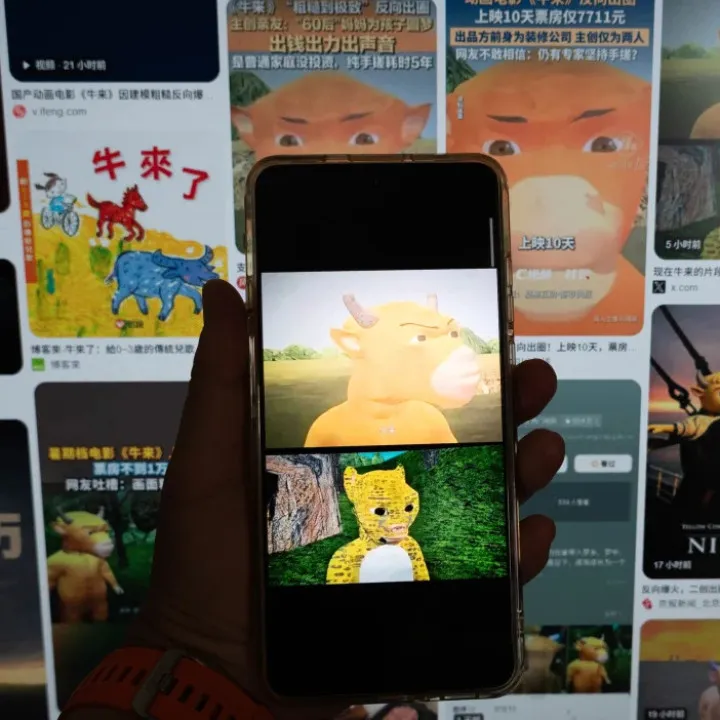
Following a young calf, a skylark and a leopard as they navigate a dreamlike coming-of-age story, ‘Niu Lai’ opened in Chinese cinemas in early August. It initially barely registered, drawing criticism and selling just over 200 tickets in its first 10 days. That changed when clips and stills of its crude 3D animation began circulating online. Intrigued by its so-bad-it’s-good appeal, viewers began buying tickets to experience the bewildering film for themselves.
By 24 August, its box-office takings had surpassed 30 million yuan, according to data from movie-tracking site Mao Yan.
The story behind its production only deepened the internet’s fascination. First-time director Xin Yumeng, a former interior designer with no formal film training, reportedly spent five years making the project with his mother, Sun Lifang, who wrote the script and music. Together, they took on nearly every part of ‘Niu Lai’, including writing, animation, editing and voice acting.
A deeply personal project created independently of China’s commercial studio system, the film often looks as though early 3D software has been pushed to its limits. Yet that technical roughness has become central to its appeal, making the human labour and determination behind every frame unusually visible.
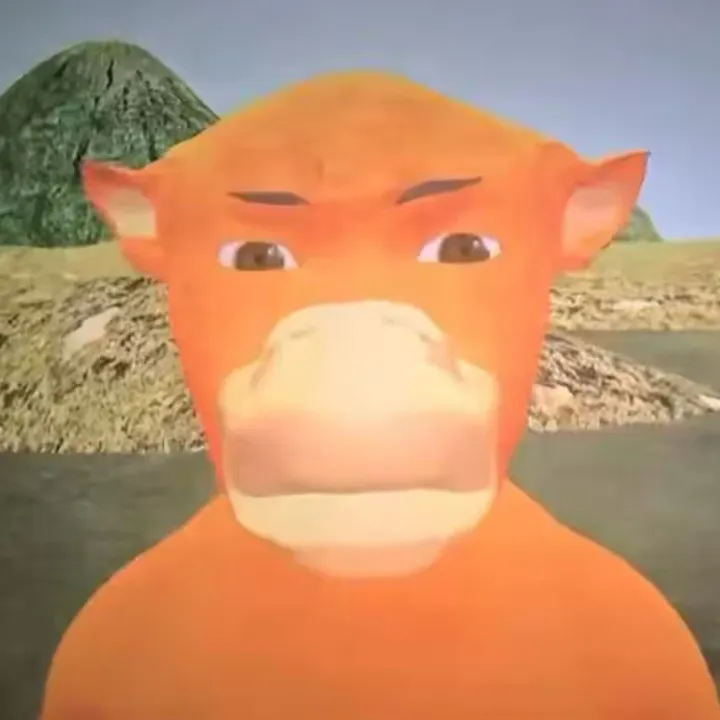
So Bad It’s Good – At Internet Speed
There has always been an audience for films that become more entertaining – and sometimes more successful – because of their perceived shortcomings. The infamous ‘so-bad-it’s-good’ film ‘The Room’ has become a fixture at midnight screenings, while countless overlooked releases have found lasting audiences among viewers who appreciate their sincerity, strangeness or spectacular failures.
What has changed is the speed. Before social media, such a film could take years of DVD circulation, special screenings and gradual word of mouth to find its audience. ‘Niu Lai’s’ turnaround from critical ridicule to a widely shared cinema event happened within weeks – crucially, while it was still showing in theatres.
The film also arrived when the internet’s appetite for ironic brainrot humour was especially high, turning its surreal story and visibly rough presentation into part of the attraction. That doesn’t mean audiences are buying tickets solely to laugh at it. The same raw 3D imagery that makes the film ideal meme material also helps it stand apart from the smooth, glazed-over AI content filling social feeds.
It also differs from other viral, meme-friendly releases such as Sony-Marvel superhero film ‘Morbius’, whose online popularity failed to generate meaningful box-office returns during either its original run or misguided re-release. ‘Niu Lai’ has no corporate mythology to puncture, no costly studio apparatus to ridicule and no sense that executives are trying to turn a meme such as ‘It’s Morbin’ Time’ into a marketing strategy.
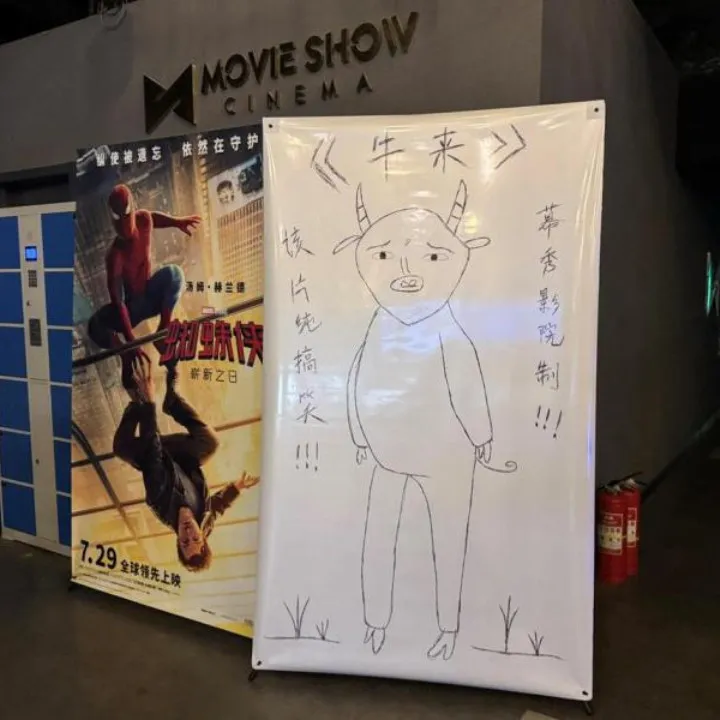
Audiences aren’t simply paying to mock a failed blockbuster. They are showing up in remarkable numbers to witness a two-person labour of love that reached cinemas despite theatre owners reportedly advising against its release.
Why Its Roughness Works Now
At a time when AI-generated imagery is increasingly slick and visually anonymous, ‘Niu Lai’s’ limitations make its human origins impossible to miss. Its basic character models, uncanny movement and flat textures invite ridicule, but they also expose the individual labour behind each imperfect frame. The scale of the effort matters too: a mother and son spent five years creating a film that does little to conceal the limits of what they could achieve.
Its basic visual language has come to represent an authenticity that audiences see as a counterpoint to AI-generated imagery. The film is so saturated with the irregularities of human creativity that, as the internet refrain goes, ‘AI could never.’
Created with almost no money and presented as it is, ‘Niu Lai’ feels more personal than flawless imagery with no discernible author behind it. Its bizarre clips may attract attention, but its rising box office suggests viewers see more than an opportunity to laugh. They recognise that the film is neither a studio-manufactured bid for ‘authenticity’ nor an attempt to join the joke with the awkwardness of a parent on Facebook.
The same response would be almost impossible for a studio to engineer deliberately. ‘Niu Lai’ is a genuine passion project, with its limited resources and extraordinary persistence leaving the character of its creators visible throughout. The industry may view its surprise success as a shortcut to online fame, but fabricated amateurism rarely inspires the same affection.
Xin and Sun didn’t set out to make a meme; they set out to make a movie. ‘Niu Lai’ resonates because it’s an original film whose makers remain visible in every frame – neither ‘AI slop’ nor another technically immaculate franchise release disguised as an ironic internet joke.

Born in Korea and raised in Hong Kong, Min Ji has combined her degree in anthropology and creative writing with her passion for going on unsolicited tangents as an editor at Friday Club. In between watching an endless amount of movies, she enjoys trying new cocktails and pastas while occasionally snapping a few pictures.