
Spoiler Warning: This piece discusses major plot points from ‘Ramayana: Rise of a Legend’.
With a reported USD$500 million budget across two films, ‘Ramayana: Rise of a Legend’ arrives with expectations to match its scale. Director Nitesh Tiwari’s adaptation of the Hindu epic assembles major Indian stars, elaborate visual effects and a score by Hans Zimmer and A.R. Rahman.
This first instalment must establish kingdoms, untangle family rivalries and set a divine destiny in motion. While there is much to admire, its characters sometimes struggle to compete with the overwhelming grandeur around them.
Read More: Christopher Nolan’s The Odyssey (2026) Is A Brutal, Beautiful March Back Home
What Is ‘Ramayana: Rise Of A Legend’ About?
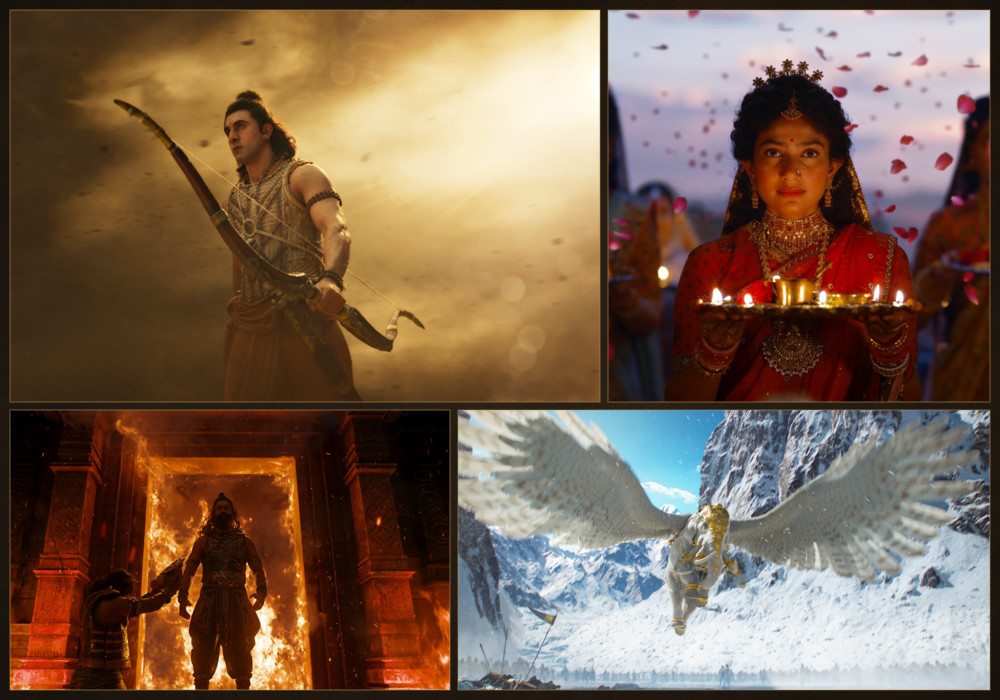
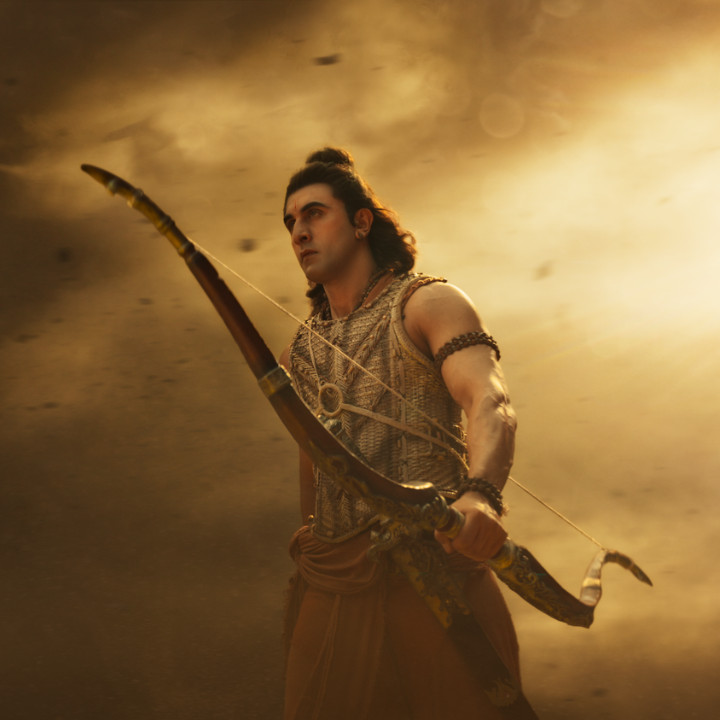
Bollywood leading man Ranbir Kapoor – known for ‘Barfi!’, ‘Sanju’ and ‘Animal’ – takes on the role of Rama, the prince of Ayodhya. A human incarnation of the Hindu deity Vishnu, Rama is sent to Earth for a greater purpose: confronting the increasingly powerful ruler Ravana.
Rama’s father, King Dasharatha, plans to make him king. But his stepmother invokes an earlier promise, demanding the throne for her own son and 14 years of exile for Rama. Rather than challenge his father’s word, Rama accepts banishment to the forest. His wife Sita, played by prominent southern Indian actress Sai Pallavi, accompanies him, along with his devoted younger brother Lakshmana, played by television star Ravi Dubey.
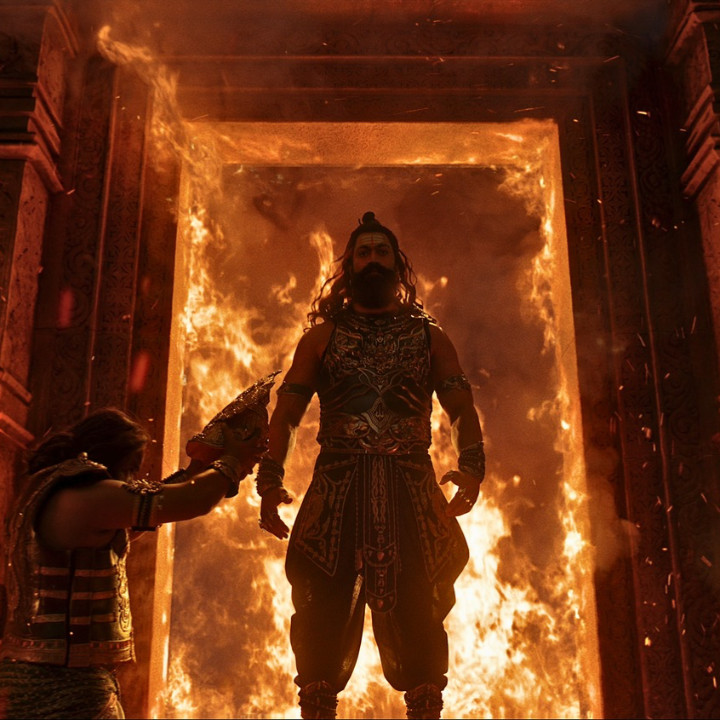
Their eventual opponent is Ravana, the ten-headed demon king of Lanka, played by Yash. Tiwari’s version gives the character a compelling backstory: initially seeking power to free his enslaved people, his desire for liberation curdles into vengeance and conquest. His suffering makes his anger understandable, even as his actions become increasingly destructive.
Ravana’s extraordinary power stems from a blessing granted by the Hindu creator god Brahma after an extreme act of penance. It shields him from gods and other supernatural beings, but leaves him vulnerable to humans. This loophole is precisely why Rama’s human incarnation proves pivotal: he can challenge an enemy the gods cannot defeat on their own.
The conflict becomes personal when Ravana abducts Sita and takes her to Lanka, transforming Rama’s exile into a rescue mission. The crisis perfectly aligns his duty as a husband with his larger divine destiny. This first instalment follows the events leading up to that breaking point, leaving the epic war between Rama and Ravana simmering for the next chapter.
The Performances
Yash makes the strongest impression as Ravana. His anger is rooted in a painful history, and his authority carries the ferocity of a man prepared to use it. While his early experiences explain the man he becomes, they never excuse his later cruelty. That duality gives Yash far more to work with than a generic villain demanding blind obedience.
Kapoor faces a different challenge. Rama’s devotion to duty is fundamental to the story, but the screenplay’s strict focus on preserving his nobility can leave the performance feeling somewhat restricted. His decisions are admirable, but the internal doubts and frustrations behind them rarely surface on screen. It is in the subtler exchanges with Sita and brief flashes of anger that we see how much more compelling he becomes when the film allows those deeper feelings to emerge.

A late aerial battle pits Ravana against Jatayu, a giant vulture who tries to rescue Sita as she is being carried away. Voiced by Anupam Kher, the winged guardian attacks Ravana’s flower-shaped flying vessel, bringing the film’s elaborate machinery directly into the fight. It’s an inventive set piece that makes full use of the story’s fantastical world.
Unfortunately, the heavy use of CGI sometimes makes the film’s surroundings look artificial. The elaborate scenery and large-scale action can also at times draw attention away from the characters. While a beautifully rendered landscape can establish the scale of Rama’s journey, it cannot communicate what leaving home actually means to him.
Echoing this grand approach, Zimmer and Rahman’s score amplifies the film’s epic ambition, giving its dramatic face-offs and key plot reveals serious impact. However, this music also exposes a larger flaw within the production: the film knows exactly how to announce that a moment is important, but the writing often fails to build the emotional foundation needed to make those moments truly land.

The Verdict
‘Ramayana: Rise of a Legend’ offers an expansive fantasy adventure, featuring a formidable central antagonist and several sequences that make a strong argument for seeing it on the big screen. The filmmakers’ enthusiasm for the material is evident, and the blend of family politics, romance and supernatural conflict provides the story with a rich foundation to build upon.
However, there is reservation in how much of its emotional impact depends upon an audience arriving with an existing attachment to these characters. Viewers already familiar with Rama and Sita can bring that connection with them into this film. Those encountering their story for the first time may reasonably want more opportunities to understand them beyond their responsibilities.
As the opening half of a larger adaptation, it also asks for a willingness to wait for the bigger picture: while this first chapter thoroughly establishes the world, the central conflict remains unfinished. Part 2 already has solid groundwork, particularly in Yash’s Ravana. Giving Rama and Sita more space for character depth would make the continuation considerably more emotionally engaging. For now, this is an entertaining, somewhat inconsistent introduction to a cinematic adventure where ambition remains the greatest attraction.

Catherine Pun
A Hong Kong native with Filipino-Chinese roots, Catherine infuses every part of her life with zest, whether she’s belting out karaoke tunes or exploring off-the-beaten-path destinations. Her downtime often includes unwinding with Netflix and indulging in a 10-step skincare routine. As the Editorial Director of Friday Club., Catherine brings her wealth of experience from major publishing houses, where she refined her craft and even authored a book. Her sharp editorial insight makes her a dynamic force, always on the lookout for the next compelling narrative.