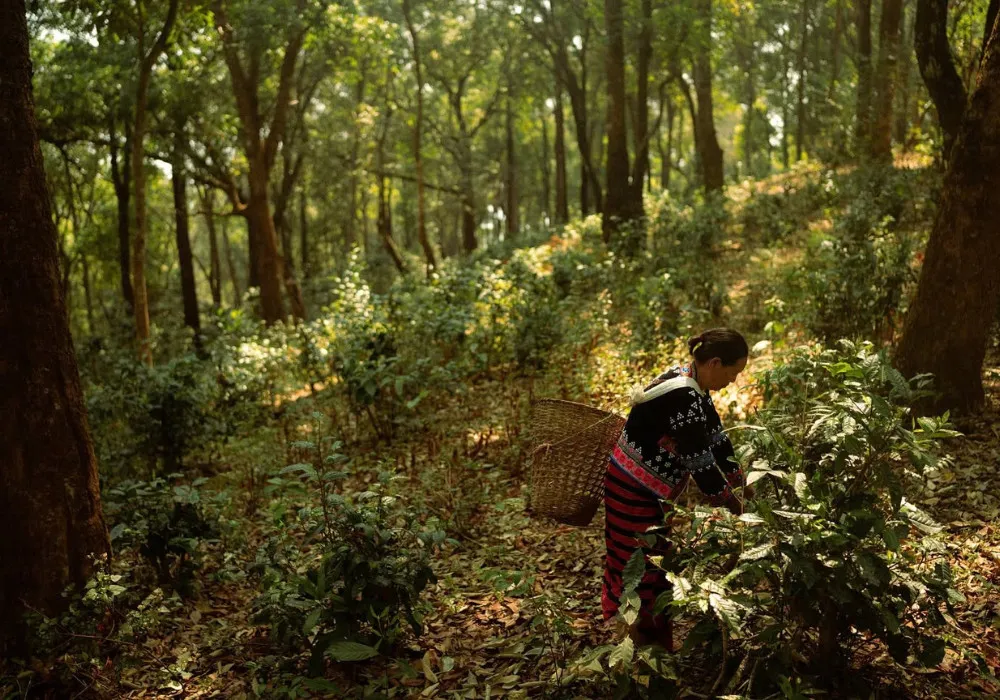

Monsoon Tea’s latest project is turning birdsong, insects and forest ecosystems into measurable data, challenging how sustainability is communicated to consumers.
For years, sustainability has largely been communicated through labels. Organic. Fair trade. Rainforest Alliance. But how many of those claims can consumers really understand, and how many translate into measurable benefit for the planet?
For Monsoon Tea, a tea company based in Chiang Mai, Thailand, the answer lies less in certifications and more in hard data.
Known for its forest-grown teas, the company has launched its Biodiversity Traceability Project, combining artificial intelligence, bioacoustics and supply chain technology to measure biodiversity levels across its tea-growing regions in real time.
The project builds on Monsoon Tea’s long-standing effort to prove that agriculture and biodiversity don’t need to exist in opposition.
Read More: Your Guide To Global Wellness Day 2026 In Bangkok
Rethinking How Tea Is Grown
Tea is one of the world’s most consumed beverages, yet its production often comes with significant environmental consequences.
Across many tea-growing regions, forests have been cleared to make way for large-scale monoculture plantations. These systems frequently rely on pesticides, fertilisers and irrigation infrastructure to maximise production, often at the expense of local ecosystems.
Monsoon Tea has spent more than a decade pursuing a different model.
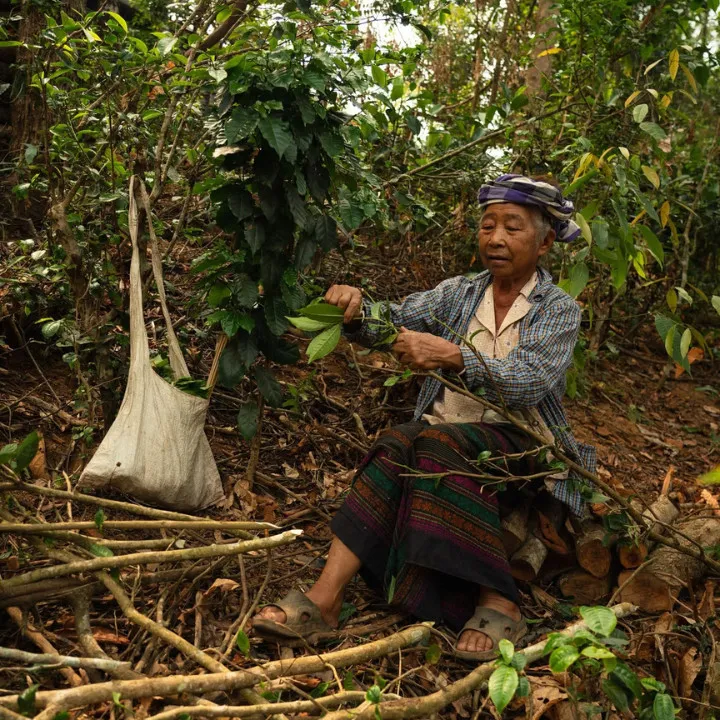
Founded in 2013 by Swedish entrepreneur and tea master Kenneth Rimdahl, the company sources tea from forested areas in Northern Thailand. Here, tea plants grow alongside native trees, insects, birds and wildlife, rather than in forests cleared for cultivation.
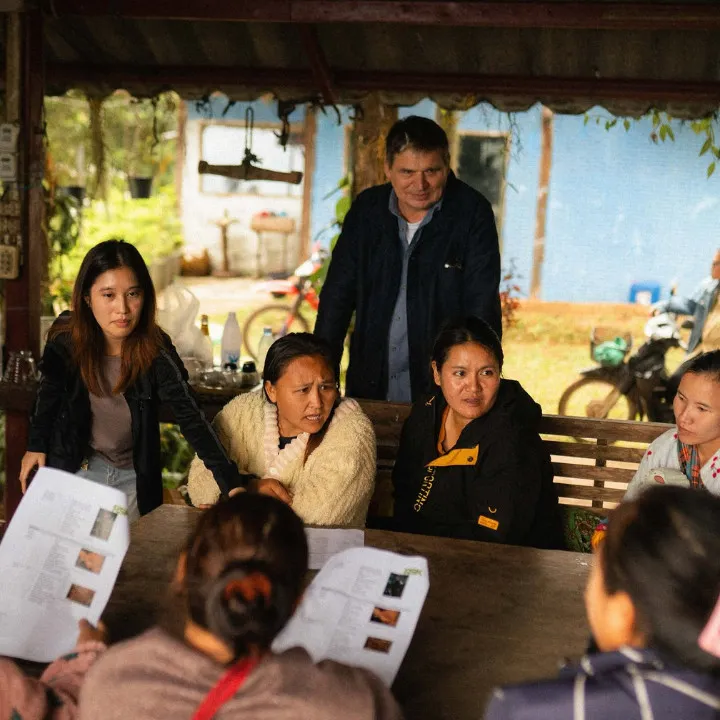
The company works with local communities to create economic incentives for keeping forests intact. The idea is simple: farmers can make more money by protecting forests than by clearing them.
Measuring What Lives In The Forest
While the concept itself is relatively simple, proving its impact can be far more complex.
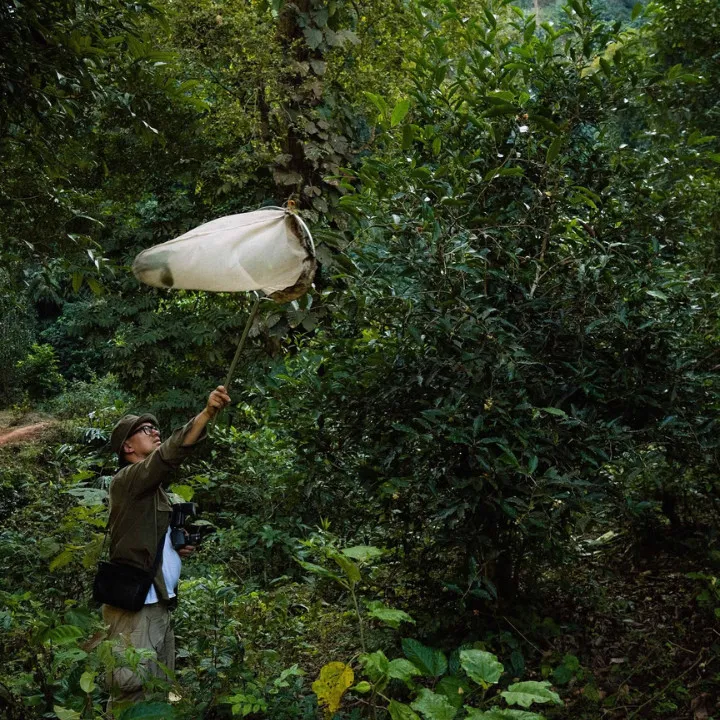
That challenge led to the creation of the Tea Fauna Project in 2018, a biodiversity research programme developed in collaboration with entomologist Alexey Reshchikov. Through years of field research, insect monitoring and species documentation, the project has catalogued numerous species living around tea-growing areas, including several previously unknown to science.
Two newly identified species, a parasitic wasp and an ant, were subsequently named Drepanoctonus rimdahli and Strumigenys rimdahli in recognition of Rimdahl’s contribution to the research.
That research now forms the foundation for the company’s next step: making biodiversity traceable.
Turning Birdsong Into Biodiversity Data
Launched in 2024, the Biodiversity Traceability Project aims to give consumers a measurable understanding of biodiversity where their tea is grown.
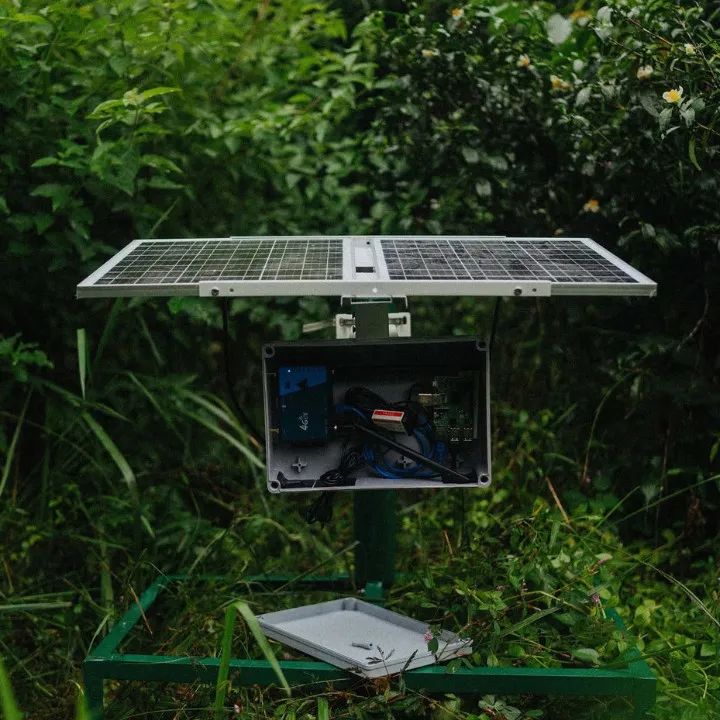
Across tea forests in Northern Thailand, solar-powered sensors continuously record the sounds of surrounding ecosystems throughout the year. The recordings are transmitted via mobile networks and analysed using artificial intelligence. The project was developed in collaboration with experts from the Asian Institute of Technology.
The system is capable of identifying individual bird and insect species based solely on their sounds.
From there, Monsoon Tea’s proprietary algorithms generate biodiversity scores using what the company calls the Rimdahl Scale, a framework designed to quantify ecosystem health and biodiversity levels at each tea origin.
The company is also working closely with farming communities, providing training and mobile technology to help producers participate in the system while continuing to cultivate tea within forest ecosystems. If farmers can show that their biodiversity scores have improved, they can also receive a bonus.
It’s an approach that moves the sustainability conversation beyond marketing language and towards measurable ecological impact, while also providing better financial returns for local farmers.
Learn more about Monsoon Tea here.

Chol is a Thai writer and editor specialising in travel, culture, and lifestyle. A former magazine writer and contributor to several travel guidebooks, she has also appeared in Netflix's Midnight Asia. She is passionate about storytelling and exploring Thailand's diverse communities and landscapes.