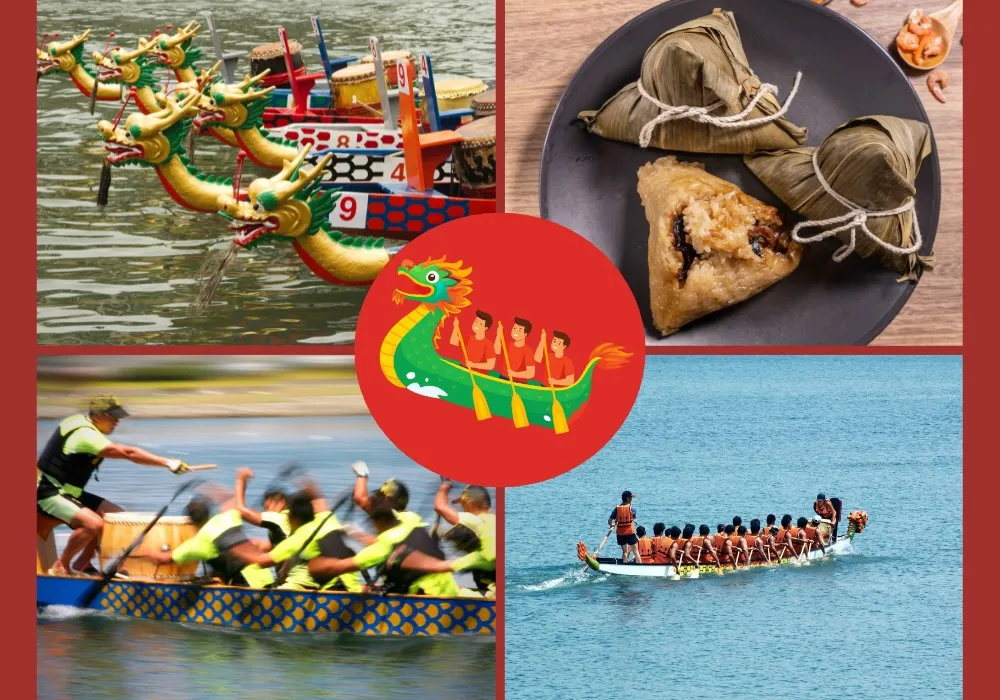

Falling on the fifth day of the fifth lunar month, 19 June in 2026, the Dragon Boat Festival is one of the most vivid and culturally rich celebrations across Chinese communities – and few places bring it to life quite like Hong Kong.
In the city, the force of paddles cutting through Victoria Harbour, the beat of drums on the water and the scent of bamboo-wrapped rice dumplings all form part of the experience. Rooted in folklore and tradition, the festival has also become one of Hong Kong’s most energetic annual events. For anyone looking to understand its meaning beyond the races, here’s a closer look at what the Dragon Boat Festival is really about.
Read More: Villa Haw Par – The Next Era Of One Of Hong Kong’s Most Historic Mansions
Origins Of The Dragon Boat Festival
The Meaning Behind The Dragon Boat
A Closer Look At Rice Dumplings
Dragon Boat Festival In Hong Kong Today
Where To Watch Dragon Boat Races In Hong Kong
Origins Of The Dragon Boat Festival
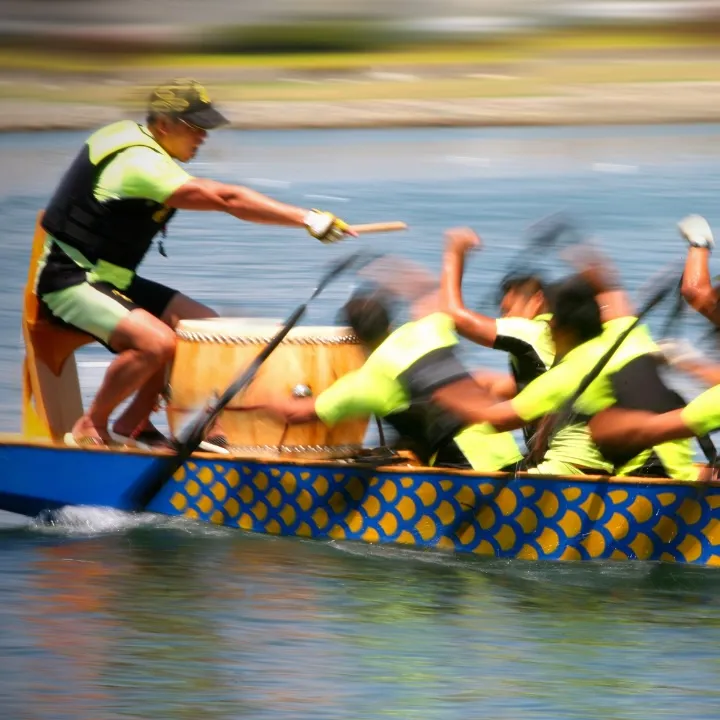
The Dragon Boat Festival dates back over 2,000 years to ancient China. While the festival has origins in early summer customs linked to disease prevention and river worship, it’s most widely associated with the story of Qu Yuan, a poet and statesman from the Chu Kingdom.
Although Qu Yuan served as a loyal minister to the royal family, he was exiled after being falsely accused of treason, largely due to his opposition to the Chu ruler’s desire to form an alliance with the Qin Kingdom. When his state eventually fell to Qin, Qu Yuan is said to have drowned himself in the Miluo River in protest and despair. According to legend, local villagers rushed out in boats in a desperate attempt to save him or recover his body. They also threw balls of glutinous rice into the river to distract fish from consuming his remains.
Over time, these acts of mourning and protection developed into the customs that now define the Dragon Boat Festival, including dragon boat racing and the preparation of rice dumplings. While other origin theories exist, including ancient dragon worship and seasonal customs, Qu Yuan’s story remains the best-known narrative tied to the festival’s beginnings today.
The Meaning Behind The Dragon Boat
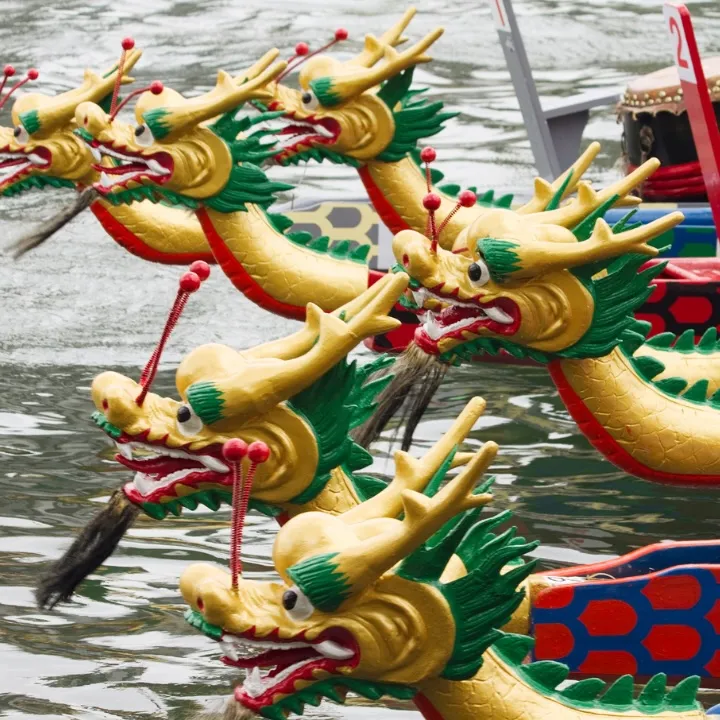
The dragon boat itself comes from a combination of ancient ceremonial practices and the legend of Qu Yuan. Long before Qu Yuan’s story became central, communities in southern China marked the fifth lunar month – a period considered inauspicious and prone to disease – with water-based ceremonies intended to ward off evil spirits and promote health.
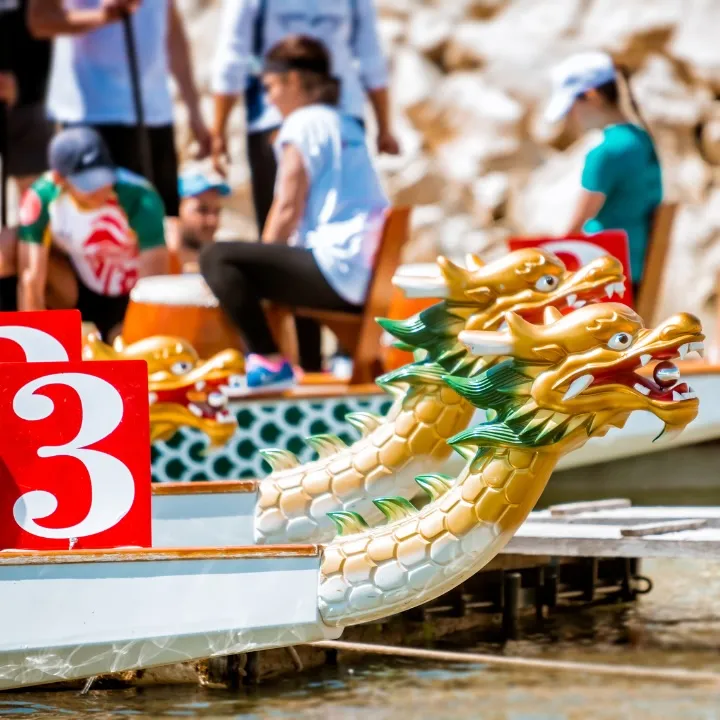
In Chinese culture, the dragon is revered as an auspicious water deity associated with rain, rivers and agricultural prosperity. Racing these boats is closely tied to the idea of awakening and summoning the dragon, bringing it to life through ceremony, movement and sound.
This is still reflected today in traditional eye-dotting ceremonies performed before races, where the dragon head is symbolically awakened to invite strength, protection and good fortune. Alongside this is the legend of Qu Yuan, with the races said to echo villagers’ attempts to rescue him, while the beating of drums helps drive the paddlers forward and symbolically ward off harm.
Together, these elements transform the dragon boat into more than just a vessel. It becomes a living cultural symbol central to the festival.
A Closer Look At Rice Dumplings
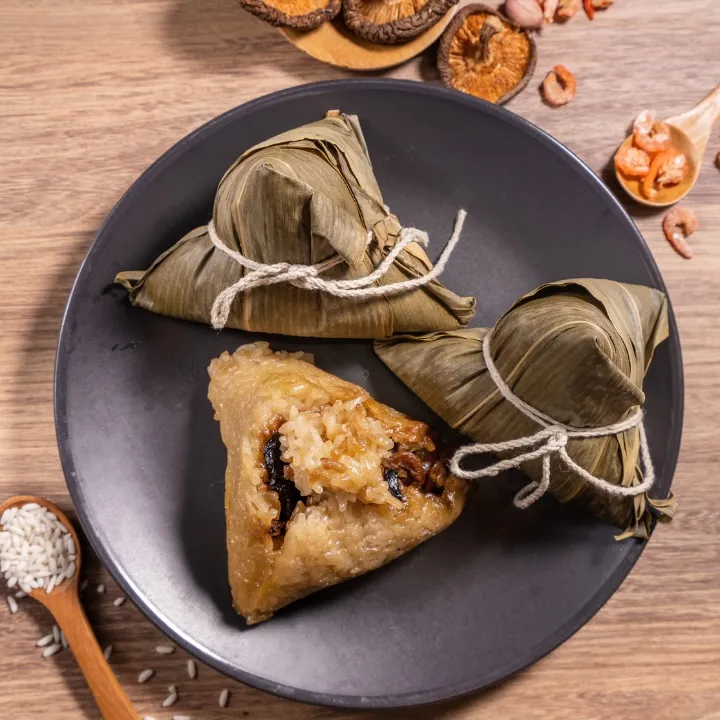
Zongzi, or glutinous rice dumplings wrapped in bamboo leaves, are closely tied to Dragon Boat Festival celebrations. Their origins are linked to the legend of Qu Yuan, when villagers tossed rice balls into the river to protect his body.
Over time, this act developed into the preparation and sharing of zongzi, which now come in a variety of regional styles – sweet or savoury, with fillings ranging from red bean paste to salted egg yolk and pork belly. In Hong Kong especially, premium versions from luxury hotels and heritage brands have turned zongzi into both a festive staple and a seasonal delicacy each year.
Dragon Boat Festival In Hong Kong Today
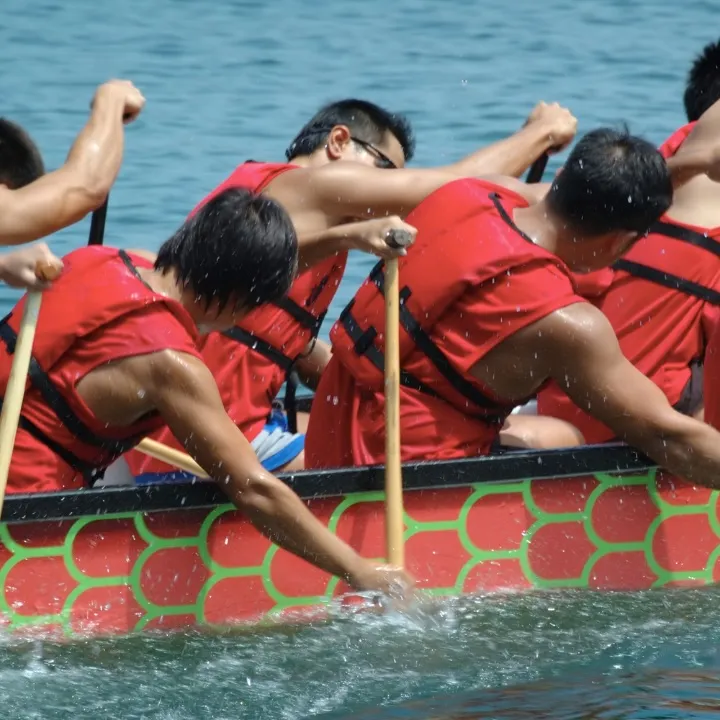
In modern-day Hong Kong, the Dragon Boat Festival has become both a major race day and a cultural celebration. Victoria Harbour becomes the main gathering point, with races drawing locals and tourists to the waterfront. The energy is festive and loud – drums sounding in time with paddles, crowds lining the harbour and the city marking the arrival of summer.
Away from the races, many families also observe more traditional customs, such as hanging herbs like calamus at home for protection against harmful spirits, balancing eggs at exactly noon on the day of the festival, or preparing traditional foods together. It’s a day shaped by both public celebration and family tradition.
Where To Watch Dragon Boat Races In Hong Kong 2026
- Eastern District Dragon Boat Race & Carnival
- 14 June, 8am to 5pm; Chai Wan Public Cargo Working Area
- Stanley International Dragon Boat Championships 2026
- 19 June, 8am to 5pm; Stanley Main Beach
- Aberdeen Dragon Boat Race 2026
- 19 June, 8am to 4pm; Aberdeen Promenade/Aberdeen West Typhoon Shelter
- Tai Po Dragon Boat Race & Carnival 2026
- 19 June, 8:30am to 1pm; Tai Po Waterfront Park Promenade
- Tai O Dragon Boat Water Parade & Race 2026
- 18 June, 9am to 1pm – 19 June, 8:30am to 3pm; Tai O Creek & Pier
- Sai Kung Tuen Ng Festival
- 19 June, 8am to 1:30pm; Sai Kung Waterfront & Promenade
- Sha Tin Dragon Boat Race
- 19 June, 8am to 1pm; Shing Mun River (Banyan Bridge-Sha Yin Bridge)
- Cheung Chau Dragon Boat Race
- 19 June, 10am to 4pm; Cheung Chau Typhoon Shelter
- Tuen Mun Dragon Boat Race
- 19 June, 9am to 1pm; Castle Peak Bay Typhoon Shelter, Area 44
- Sun Life Hong Kong International Dragon Boat Races
- 27 June, 8am to 6:15pm – 28 June, 8am to 5pm; Tsim Sha Tsui East Promenade

Born in Korea and raised in Hong Kong, Min Ji has combined her degree in anthropology and creative writing with her passion for going on unsolicited tangents as an editor at Friday Club. In between watching an endless amount of movies, she enjoys trying new cocktails and pastas while occasionally snapping a few pictures.